Showing posts with label sarah. Show all posts

Monday, July 24, 2017

Don't Say It: 15 things that should never be in your query

Before we get down to business, let's stop for a second and celebrate. This is my 100th post at YAtopia!


So we're talking about pitching this month at YAtopia (Just in time for Pitch Wars, too!). Rae Chang and I were just chatting on twitter about what phrases in queries are giant red flags for us. Some of these may seem obvious, but I guarantee anyone who has read slush has seen them more than a few times.

If you find yourself writing any of these phrases into your query, it may be a simple matter of ... you know, not writing them. However, some of these might require some research and maybe an attitude adjustment.

1) "All the YA books out there are poorly written, but mine is different" or some variation thereof

Well. Check out the ego on this guy.

Don't write in a genre/category you don't respect. Period. This may be a matter of you not reading widely enough in your genre, which is easily fixed. Otherwise, it's a lack of respect for the genre/category itself, in which case, why are you bothering? If you believe everything on the shelves in a well-established genre/category is trash, find another genre/category.

2) Putting down literary agents, whether as a group or individuals.

We all know the agent-publisher system is slow and frustrating. However, it's the best we have and we're just all trying to work within it. Why some people think it's okay to complain about literary agents' "greed" or response time or judgement or whatever while also asking those agents to represent them - I will never understand.

3) "There's nothing like this on the market"

Yes there is and I can name ten examples off the top of my head. Again, read more widely in your chosen genre; you don't know your market well enough.

Unless this is literally true, in which case, it's probably unpublishable. Hey, a guy in my first writing group tried to convince me that not having a single piece of punctuation for 9 pages was perfectly fine in commercial fiction (yep, not even literary or experimental).

HOWEVER, every time I've seen this in a query, it's been the former, not the latter.

4) "My book will appeal to readers of Harry Potter, The Hunger Games, Divergent, Twilight, and Jane Austen."

Sure it will, Sparky.

If you can't find comp titles that aren't mega-bestsellers, you (say it with me, I'm going to be saying it a lot) don't know your market well enough.

And you really have to love the authors who are just a little bit bolder and say things like "this book is the next Harry Potter, a guaranteed bestseller."

Listen, not even Harry Potter was the next Harry Potter when it was pitched. Nobody knows whether or not a book will take off like that. Keep your expectations reasonable.

5) "I've loved books since I was five years old when..."

This isn't a turn-off so much as it's ... boring. Loving books doesn't make you special in this industry, so saying this in a query is a waste of ink/electrons. If you don't have a lot to put in the "bio" section of the query, that really is totally fine! You can actually leave it out if you don't have anything beneficial to add there. The book is the most important thing.

6) Drop the cliches

As much as you can, eliminate cliches from your query letter. You have such a short space to show how your book is unique, why would you want to use phrases that we see all the time? Things like "so-and-so was just a normal girl until..." and "will never be the same" and "more than he bargained for" and "an incredible journey" and "falls into the wrong hands" and "to make matters worse" and "will change everything" will make experienced query readers roll their eyes.

7) Your age

It doesn't matter and all it can do is create subconscious bias.

8) That your friends/family love the book

Of course they do. My friends loved the first book I wrote. And it was absolute crap. (Not saying yours is, but I'm saying the opinions of your friends/family (or even your old English teacher) will not sway an agent/editor.)

9) Personal information about the agent

Knowing professional information (the agent's clients & the books they've sold) is great. But when you mention anything that doesn't have to do with the agent's professional career, you've crossed a line. Stalking is a real thing that many agents have to worry about, so there's no reason to raise a red flag like this.

10) "Dear Agent"

Write out their name. To the agent, lack of personalization in the greeting, means that you are mass emailing every agent for whom you could find an email address.

11) "Fictional novel"

All novels are, by definition, fictional.

12) "doesn't really fit in a genre"

If your book sells, it's going to have to go on a shelf somewhere. Pick the closest thing so I know roughly what to expect.

And tbh, most of the time this is said, the book fits perfectly into a genre, which tells me you know don't your market very well.

13) First person POV from your character.

It's often creepy, but sometimes it's just confusing and clunky. All book and character descriptions should be in 3rd person present tense, no matter what the book is in.

14) Rhetorical questions

You are not the exception to this rule. Don't do it. Just don't. Please, trust us on this. They don't work.

15) "trend" and "diversity" in the same sentence.

Diversity is not a trend.

While we're at it, you didn't write "an LGBT novel" unless you have lesbians, gay people, bisexual people, AND trans people represented in the book. You probably wrote a f/f romance or a novel featuring a trans character, etc. 

Thursday, May 25, 2017

Authors: Kill These Bad Social Media Habits

Hello YAtopia! So sorry for being a day late on this post but I am in the middle of moving (within the same city) and also my Windows decided to "update" and now my touch pad doesn't work. Yay.

Our topic this month is "Kill Your Darlings" so I'm here to talk about social media practices you should murder and leave in a ditch somewhere!

1) Twitter auto-DMs when someone follows you

I follow someone on Twitter because I think they're fun/nice/entertaining/informative. Within minutes, I have a private message from them. Which seems nice, right? But wait, the message is an impersonal version of "Thank you for following me. Check out my books at [amazon link]."

Me:


via GIPHY

Don't do this.

Since people always argue with me about this when I teach "Social Media for Authors" classes, I'll try to explain why. If you're at a party and you think someone seems like an interesting person to talk to. You go up and introduce yourself. The person says, "Thanks for saying hi. Check out my office supply store on Main Street," then turns and walks away.

At the last conference I went to, we literally had a 15-minute rant session about how much we hate auto-dms. Yes, even if it's not a direct sales pitch.

If you want to interact with your new followers, reply to something they've tweeted with a relevant comment. That's the best way to begin a real relationship.

Treat people like people, not like potential customers.

2) Feeding your Facebook posts into your Twitter posts

We all know Twitter has a 140 character limit, right? A lot of people have it set up so that whatever they post to Facebook automatically posts to twitter. There are more subtle reasons as to why this isn't a good idea, but the big one is that your message is truncated. Most twitter users are on mobile and don't want to click over to Facebook to finish reading your post. This is why doing it the other way around (Twitter posts to Facebook) isn't as bad (but still not ideal).

3) Reposting the same tweet about your book, every day

Believe me, I know how tempting it is to schedule this tweet once so you never have to think about it again. But I see the same tweet from you, every day, and it's just noise at this point.

4) Follow and unfollow and follow and unfollow and follow and unfollow for followers

Dude. I'm not going to follow you back. I follow people I find interesting, not just because they followed me.

Be fun and interesting and nice and way more people will follow you than you can get using any kind of "strategy."

5) Copyright infringement in your advertisements

We all know that stealing someone's writing and posting it without their permission is a no-no, right? Why don't we apply the same knowledge to photos? If you don't have the legal (usually, paid) right to use an image, do NOT use it in your advertisements. This goes double for celebrity photos.

Photos used in discussion/commentary are a different matter, but in promotional materials for your book? You better have the rights to use it.


These days, social media is an important part of author life. You can't make everybody happy, but killing the habits listed above will help you scare off fewer potential readers.

Friday, March 24, 2017

How to Respond to Criticism

I know it's Spring Cleaning time around here, but I have something I need to get off my mind. Hey, I guess it fits the theme, after all!

Listen authors, we gotta talk. Bad reviews and other forms of criticism can hurt. Whether you haven't even finished your first manuscript or you have published eight thousand books, you're going to receive criticism.

Like, a lot.


via GIPHY

Whether it's that guy in your MFA class, a member of your critique group, an agent offering precious feedback, an editor declining to publish your work, or a reviewer commenting on a published work, you're going to get a lot of it.

Some of it really is nonsensical and may have more to do with the reader's problems than the writing. Some of it is going to click right away. But most of it? You're going to think it's all shades of idiotic and undeserved, but sometime later (maybe years?) you're going to realize your critic had a point.

Though it may feel like it, criticism about your writing is not a personal attack. Someone saying they don't like (parts of) your book is not bullying. The info here does not pertain to actual personal attacks where the person has some kind of power over you. If you think you might want to contact the police or a lawyer, do that. Don't tweet about it, just do it. Personal attacks and actual bullying are a different issue. But in the heat of critique, it is very often difficult to realize the difference, and many authors have misconstrued the two.

It has become apparent that maybe some authors could use some tips on how to respond to criticism. From someone who has been a reader, reviewer, hopeful author, mentor, editor, published author, and publicist, I'll offer my (admittedly not perfect) advice.

1) Don't respond.

Not to argue, not to "correct." You're going to disagree with their opinions. Just do so inside your own head, okay? If it's someone you've asked to critique your work, you're permitted two words: "Thank you."

I know you want to defend yourself and your work. But you don't have to. You put your work out there and someone responded to it genuinely and honestly. That's it.

But if a reviewer got every single one of your main characters' names completely wrong, describes your light and fluffy romance as a creature horror, or grossly misrepresents your book in some other way?


via GIPHY

Don't respond.

That's it. I know you're angry and/or hurt. We're compelled to defend ourselves. Your emotions are real. But for everyone's sake (especially your own), you gotta back off.

So what can you do?


via GIPHY


via GIPHY


via GIPHY

Scream at the sky, drink a glass of wine, pet your puppy, go to yoga class, dance around your apartment to old-school Avril Lavigne, strap yourself to a chair until the rage passes, carry heavy stones up a hill then back down again, cry your eyes dry, call your BFF/sister/therapist/partner and rant about it - whatever you need to do to process your emotions privately. But then let it go.

I should be able to stop here, but recent events have shown that some of this needs to be spelled out more explicitly. So.

2) Don't write about it in any public or semi-public space.

If you wouldn't post it on facebook, twitter, and the front page of the New York Times, don't create a written record of it. Let me rephrase: If your publicist would so much as give you that little half-frown she does when you're being slightly ridiculous if you put this on twitter, don't email or message or post in a "private" facebook group. Emails can be forwarded, "private" facebook groups are the privacy equivalent of fish netting for clothing, and anything written can be screenshot.

This includes subtweets, posts where you don't name the critic and/or only summarize what they said instead of quoting them. One, you're just bringing more attention to the critique you don't want anyone to see. Two, in my nine years in the book community, I have literally never seen any response to criticism turn the tide of public opinion back in the author's favor.


via GIPHY

This isn't just so you "don't get caught" but it's because you're going to say things either you don't really mean or don't understand the full ramifications of. Writing it and making it public - that's permanent. You can't take it back, ever.

If you really can't control your compulsion to write about it, go the old-fashioned route with pen and paper. Then light that shit on fire and let your bitterness float away with the smoke.

3) Don't contact the critic.

As the kids on twitter say: don't @ me. No tweets, no emails, no goodreads comments, no facebook messages, no tumblr reblogs, no instagram comments, no sending $0.01 donations via PayPal, no writing billboards, no passing things through a friend.

"But what if...?"


via GIPHY

Nah, just don't.

And (Lady Godiva help me, I can't believe I have to say this) do not -- under any circumstances -- seek out & share personal information about them, contact their place of work, go anywhere near them in person, talk about their children in any way, tell everyone who will listen how much they hurt you, or any number of things I would never think I would have to warn you away from.


via GIPHY

4) Read your positive reviews/feedback

Negative feedback can leave you feeling defeated, in addition to angry. Chances are, you've received positive feedback. Go ahead and re-read that. Say to yourself, "See, THIS PERSON appreciates my genius." Then maybe make friends with them if you're not already. Bask in the glow.

Don't isolate yourself to the point where all you hear is praise, as that will stunt your growth as a writer, but revel in your fans when you need to.


via GIPHY

5) Don't read reviews

Some people offer this as blanket advice, but I don't. I think reviews can be a great source of both encouragement and education. And if the work is not yet published, you're going to HAVE TO listen to criticism of it. No one writes a perfect book on their own.

But some people just can't handle reading negative comments of their published work. And at that point, it's not like you can change the book anyway. Most of the time, you think you can handle it, but then you find them gnawing on your mental health and energy. If you find that happening to yourself, if your muscles are straining to respond or lash out, don't read any of your reviews.


via GIPHY

Ask your publicist to send you the good ones, but don't lay one digital finger on your Goodreads or Amazon listing.

Some critique may find you, but you don't have to seek it out.

6) Listen & Consider

It may seem like this is the opposite of the last point, but it doesn't have to be. Here's the thing: a lot of that criticism that stings or feels like a knife to your gut? It may be valid.


via GIPHY

Whether it's that you lean too heavily on the word "smirk" or your book could be harmful to a marginalized group, wait until you're calm and really consider the potential validity of the criticism. Maybe discuss it privately with someone whose opinion you value (but make sure it's also a person who is not afraid to tell you when you're wrong).

Take it in, process it, and use it to improve your writing.

If something in your writing has deemed to be hurtful, apologize. (Note: "I'm sorry you were offended" is not an apology.))

7) Revise or Start Something New

Now it's time to move on. If the work is not yet published, and you can use the criticism to improve your work, do that.

If the book is published. Write something else. Something better and (if applicable) something not harmful.

via GIPHY


via GIPHY

Tuesday, January 24, 2017

What's Next? How an Author Chooses Her Next Project

My second book, Keeping Her Secret, came out in August and since then I haven't written a single word on a new book. Not because I don't have any new ideas, but because I have too many.

My first book (Dragons are People, Too) was a fast-paced, high-stakes urban fantasy and the latest was a light-hearted summer f/f romance, so I'm not really hemmed in by genre expectations. My current ideas include a fun contemporary, an other-world fantasy, a heavy contemporary, and even an epistolary historical. I love reading in all genres and want to write most of them.

My love and passion for writing hasn't diminished; I feel the pull as strongly as ever. I just can't decide what to start. We're talking about beginnings this month on YAtopia and it's got me thinking a lot about the next book.

A conversation with my agent helped me rule out one of the books, as editors aren't interested in that certain sub-genre, so I'm starting to make progress. But when you have several potential projects that excite you for different reasons, how do you choose?

One of the projects requires significantly less research than the others, so I could go the easy route and write that one. But I'm not the kind of person who takes the easy way and I actually really enjoy research. Then again, just because it doesn't require as much research doesn't make it easy.

One of the projects resolves around an issue near and dear to my heart, but it is not an easy one to discuss and every bit of it would require careful consideration. I could do my absolute best and still mess up and that is terrifying for many reasons.

I've never been so torn between projects before, so here's my plan: I'm going to take the three most promising projects and write a scene or two from each and see if anything catches. For an ENTJ and an engineer, this loosey-goosey plan makes me anxious. I wish I could develop an equation, assign values, do some excel analysis, and come out with a clear answer, but writing just doesn't work that way. But it's been too long since I put pen to page and my analytical mind is paralyzed, so I have to push it back and let the creative brain take over, if only for a little while.

Unless anyone else has a better method? I'm all ears over here.


Sarah Nicolas is a recovering mechanical engineer, library event planner, and the author of Dragons are People, Too and Keeping Her Secret. She is a contributor for Book Riot and also writes romance as Aria Kane. When she’s not writing, she can be found playing volleyball or drinking wine. Find her on Twitter @sarah_nicolas.

Wednesday, August 24, 2016

Why No One Should Ever Read YA


Another day, another think piece about how Young Adult literature is a heaping garbage fire destroying our country one teen and/or adult at a time -- from someone who's read approximately one half of one modern YA book, of course. As a YA writer and reader, I don't even feel angry anymore. I just feel sad for the writer and anyone they may have influence over.

So here's my list of 9 Reasons Why No One Should Ever Read YA

1. All of it is total crap

I mean, we all agree that writers like John Updike, Lewis Carroll, Philip Pullman, CS Lewis, SE Hinton, Maurice Sendak, J.D. Salinger, Charles Dickens, Madeleine L'Engle, William Golding, Robert Louis Stevenson, and Anne McCaffrey are the absolute worst, right? Talentless hacks, the lot of them.

2. Shaming people for what they read is a great idea

In a country where 60 percent of America's prison inmates are illiterate, the cost of illiteracy is $20 billion per year44% of American adults do not read a book in a year, and some states actually base their future need for prison beds on how well current elementary students are performing on reading tests, we should definitely be discouraging people from reading what they like.

3. Teens have terrible taste

They made The Beatles and Rolling Stones famous, after all. They're pretty much at the forefront of almost every cultural phenomenon. Maybe it's the fact that they're at the height of mental capacity with the most gray matter available compared to any other stage of life. Obviously, so tawdry.

4. Nothing can be learned from YA books

Just because they discuss social inequity, life & death, gender issues, racism, sexuality, self-confidence, suicide, consequences of choices, self-acceptance, the importance of one person, bravery, and/or the value of friendship and strong family relationships, doesn't mean they have any actual value to the reader.

5. They're totally fun, which is definitely the worst thing reading can be

Research has shown that "reading centered on reading books for fun creates kids who love to read." Who wants that? They might as well be watching reality TV, amirite? Forcing people to read books that make them feel like they're being punished, because you like it or because they're "important" is obviously the best way to make someone a reader.

6. YA books are unrealistically hopeful

Even in the darkest of dark moments, there is still hope, the feeling that everything is going to be okay. The endings are satisfying, if not necessarily happy. And if there's anything that destroys people's lives, it's closure.

7. The main characters are usually likable (even when they're flawed or even actual psychopaths)

And literally no one wants to spend hours on end with someone they actually like. Kindness, optimism, and good intentions are the absolute worst things a character could have. If you don't finish a book with the feeling that humanity doesn't deserve to continue surviving, the author has misled you.

8. YA books change lives (and change is bad?)

People have reported that YA books have helped them overcome depression, gain self confidence, be more open-minded, make real-life friends, empowered them to stand up for themselves, cope with tragedy, inspired them to pursue a hobby, and even *gasp* read more. But change is bad, so that's terrifying.

9. Accessibility is for plebes

Books that entertain, keep your interest, and can be understood upon the first read might as well be printed on the backs of cereal boxes*. If they can't read at a PhD level, they shouldn't be reading at all! If you have to read a book less than four times to fully understand what the author was trying to say, it's not real literature.

*Actually, can we make this happen? Oh man, could I do with a fab short story on the back of my Cheerios. And they have the money to pay the writers!


*sigh* That was exhausting. Here's another idea: How about we just let people read what they want to read and not shame them for it? That could be fun.


Sarah Nicolas is a recovering mechanical engineer, library event planner, and author. She lives in Orlando with a 60-lb mutt who thinks he’s a chihuahua. Sarah writes YA novels as Sarah Nicolas and romance under the name Aria Kane. When she’s not writing, she can be found playing volleyball or drinking wine. Find her on Twitter @sarah_nicolas.

Tuesday, May 24, 2016

Hard Truth Time: Not Every Book Deserves to be Published

I wrote this book. Let's call it MF. I thought it was fantastic, unique, clever, wonderful, etc. It was going to be a great hit and sell movies because it was so awesome.
It was the second book I ever wrote (the first is this glorious kind of mess that I do intend on resurrecting one day) and I thought I had figured out this book-writing thing. Friends told me it was great. When I saw hundreds of agent rejections, those same friends said things like, "Have you thought about self-publishing? I heard about this author who makes so much money doing that."

This was in that weird transitional period of self publishing where some industry people were just starting to admit its validity as a publishing option.

But I knew self-publishing was not right for that book. As green as I was, I knew how hard it was (and is) for self-published authors to sell books in the YA market. After querying it ad nauseam, I put it aside and started writing another book (which would become Dragons are People, Too).

While in the querying trenches for DAPT, I decided to go back to MF and see if I could repackage it or edit it again -- do something with it.

Dear Lady Godiva, was that book terrible:

  • Derivative with serious pacing issues. 
  • A sagging middle on a scale of geologic proportions.
  • Unlikable characters at every turn. 
  • Absolutely no sense of place. 
  • A magic system that makes zero sense.


With distance and a year+ of education and study, I could see the book clearly. I felt a little embarrassed that I had sent this to so many agents; that so many people I respected had actually had to read part of it. If I were to salvage it, it would require a complete start-over-from-page-one rewrite.

I'm writing this now because I see the "if this gets x many rejections, I'm just going to self publish it" conversation nearly every day now. While I fully support self-publishing (my romance alter-ego Aria Kane self-publishes most of her books), I don't think it's for everyone or every book and I do believe too many people go into it without enough research or knowledge. As with almost everything else in life: Just because you can, doesn't necessarily mean you should.

I understand this supportive culture we've developed in this industry and I love it. Publishing is a tough gig. We all need cheerleaders sometimes. But I am so glad I didn't have today's resounding chorus of "Yeah! Just self-publish it!" back then. I might have listened to them and I would have regretted it.

Because, honestly, some books just don't deserve to be published. Some books, like MF, suck big-time. And the most important part is:

that's okay! 

It doesn't mean you're a bad writer. It doesn't mean you won't ever write a great book. It is not a judgement on your worth or your value.

It's a tough truth to face. I know how hard it is to let go of a book that you've spent a year or more working on. It seems like letting go of those characters and that story will kill you or, less dramatically, that you may never write another book you love just as much.

But you will. And the next one will probably be better.

A closing note: I can't tell you how you know whether a book is worth it or not. I struggle with that, myself. But I do know that spending time away from the book can give you enough distance to make that self-evaluation. Or find a critical someone who is really not afraid to break your heart.

Thursday, March 24, 2016

Published Authors: Your Basic Author Media Kit

My day job is to plan events, mainly author events.

I have emailed my manager the words "I just can't." twice today.


Because I have spent the entire day dealing with authors who don't have the most basic materials they should have in order to promote their book, I thought I'd develop a short list of the things you should have readily available once you have a book published. Some of these may seem obvious -- and I thought so too, until today.

So please, make it easy on anyone who wants to help you promote your book and have these things at the ready the day your book is published (or earlier if you want day-of-release publicity). I like to have them saved in my google drive and dropbox so that I can access them anywhere with an internet connection.

1) A high-resolution jpg of your book cover.

At the very least, it should be 500 pixels wide and more long. I routinely get 250px wide book covers. I can't put those up on a big screen. I can't print those in an event program booklet.

Do not copy this into the body of the email. Do not put it into a word document and send it that way. Both of these reduce the quality of the image automatically. Attach it to email as a jpg attachment.

2) A high-resolution professional headshot.

If you don't have the money to get a professional photographer to shoot one, check out my post here on faking it.

No bathroom selfies, please. Unless it is a distinct and obvious part of your author brand, no purses or bra straps. Please.

Same quality and delivery guidelines as discussed in #1.

3) Your book blurb.

Well-edited. Typo-free. Not in first person from the author's perspective, unless it's a memoir.

4) Direct, clean links where your book is available for purchase. Include Goodreads even though it is not a retailer.

5) Your bio.

To be on the safe side, have the following versions prepared: 1-2 sentences, 1-2 paragraphs, a page long. Only send the page-long one if specifically requested. Most people want the 1-2 paragraphs version.


6) Your web links. Website, Twitter, Facebook, and anywhere else you maintain an author presence.

Don't make me google you. Especially if, for instance, there are violent criminals with your name who rank higher in search results than you do. For example. Hypothetically. *cough*

7) Book review quotes.

1-4 sentence quotes with source, linked if possible.


Bonus: Include numbers 3 through 7, in that order, in a single simply-formatted word document that can be sent off at a moment's notice. This is sometimes called a "one-sheet." It can include embedded images of your cover and photo, but these should not be the only way you send these files. Do not get fancy with formatting. This should be informative first.

Help yourself by helping those who are trying to give you free publicity have all the information they'll need. Please. I'm begging you.

Sunday, January 24, 2016

Ten Tips for Your Elevator Pitch

There is one thing writers at any point in their career need to have prepared: an elevator pitch.


The last time I asked an author "what's your book about?" I got a fifteen minute rambling monologue. I know a lot about the guy's son (?) but still have no idea what his book is about. If I don't know what it's about, I'm not going to buy it.

Whether you're looking for an agent, on submission, or a multi-published author, you need to be able to quickly and concisely tell other people what your book is about. And you need to prepare so that you don't find yourself hemming and hawing the next time someone asks that golden question:

So, what's your book about?

Anytime someone asks you this question, that is an epic opportunity. They are literally giving you the ability to pitch your book without any awkwardness or resentment. Take it! 

The sole purpose of an elevator pitch is to make the listener want to know more. Don't lose sight of that.

Here are ten tips to help you prepare your elevator pitch:

1) Take about 30 to 45 seconds to give the initial pitch. If they ask for more info or specific questions, that's the time to expand on your book, but don't talk for several minutes. (Reminder: your sole goal in an elevator pitch is to make the listener want to know more.)

2) Focus on story, not themes, emotional journeys, or background info. If you are pitching a published book to a reader, do not discuss your publishing path. If they want to know that, they will ask. Focus on your book.

3) Remember that you are a real person speaking to another real person. You should sound natural and conversational, not like you're memorizing something you've written.

4) You must include: genre, conflict, stakes. Most writers leave out the genre, but unless it's already obviously apparent some other way, start off with something like "Dragons are People, Too is a young adult urban fantasy about..."

5) Don't use any cliched phrases. Ex: "will never be the same," "more than he bargained for," "falls into the wrong hands," "to make matters worse," "will change everything." When you have such few precious words, don't use ones that can describe any hundreds of other books.

6) Be passionate. You can't expect others to be excited about your book if you are not.

7) Don't editorialize your book. Ex: "It's a fast-paced thrill ride.." SHOW that it's fast-paced without saying it.

8) Don't discount yourself. Do not, under any circumstances, say things like "oh, this probably sucks, but..." or "it's not that interesting.." Whatever you say, people are going to believe you, so if you tell them it sucks, they're already not that interested.

9) Consider comp titles and use them if they work really well for your book. For some books, comp titles don't work. Make an attempt, but be willing to drop this strategy if it's not working for your book.

10) Practice ad nauseum. Practice on your friends and family until they could give you the pitch themselves. When you get so comfortable with your pitch that you can mumble it flawlessly the second you wake up, that's when you're not going to freeze or mess up when asked the golden question by someone you truly want to impress.

Good luck!


Tuesday, November 24, 2015

Faking a Professional Author Photo

At the dayjob, I work with a lot of authors and frequently ask for headshots to use in our marketing of their events. You would be floored by how many people send me shots like these:

click to see what's really wrong with this one.
(Note: These are all altered stock photo images, not actual headshots I've been sent, but they are in no way exaggerations. In fact, these are probably better than 50% of the ones I'm sent))

An unprofessional author photo makes you look like an unprofessional author. Full stop. I cannot send these pictures out to my media contacts or put them on the big screen at an Authors Festival.

The primary purpose of an author's photo is to give the reader a personal connection to the author. For some readers, this is very important. My main purpose (at the dayjob) is to create recognition so an event attendee will recognize you when they see you.

But do not worry! If you're booked for an event or media appearance soon and you don't have time or money to book a pro session, you can fake a decent author headshot in about 5 minutes. In fact, here's one I just took right now at work.


1. Lighting is Everything


Great lighting can make anyone look fantastic. You want your face to be fully and evenly lit either straight-on or from multiple angles. The camera should be between you and the light source. Fluorescent lighting is the devil. Overhead fluorescent lighting is the devil and his twin brother.
The #1 best non-pro lighting is indirect sunlight while the sun is fully risen. If you can find a large window and stand a couple feet inside of it with a nice solid wall behind you, that is ideal. Covered porches/overhangs work great too. It will give you a soft glow and make colors pop. Direct sunlight can wash you out and make you squinty.

If you work during every daylight hour or live in Alaska during the Winter, you can use lamps to light your face. When I vlog at night, I put two white-bulb lamps on either side of the camera.

I'm a makeup addict, so I do have to say that makeup can supplement good lighting. A brush of blush for healthy color, a sweep of mascara and/or eyeliner to define the eyes, and a swipe of lipstick or gloss can help define your features.

2. What's Behind You?


The best backgrounds for these photos are: a solid or lightly-textured wall, an empty (of people, buildings, cars, powerlines, etc) landscape, or a bookshelf that is several feet behind you.

Weird backgrounds can be distracting and draw the attention away from you. (Like why is that dude in a graffiti-ed alley?)

3. Mechanics & Tools


You don't have to have a super fancy camera to take a decent photo. A point-and-shoot or a mobile phone camera (released in the last three years) is definitely good enough. If you can have someone take the photo for you, that is preferred, but you can actually fake this with a selfie, as long as you keep your extended arm out of the shot. My photo above is a selfie. Some front-facing cameras are better than others, but the back-facing camera will always be best, if possible.

The camera should be at or slightly above eye level. Look up to it with your face, not just your eyes. Play with tilting your head at slight angles. Make sure your whole head is in the shot and there is space between your head and the frame on all sides.

4. Keep the Creativity for Your Writing


You may think that weird face or funny hat is hilarious, but there will be many people who don't. Keep it simple so you don't run the risk of an editor removing the photo. Even if you are a comedic author, you might face the opportunity to run a writing workshop or give a keynote address and you want people to think that you're a professional.

When I say this, I know there will always be shouts of "If they don't like who I am, forget them! I'm not going to pretend to be somebody I'm not." I caution you to stop and think about this for a minute. Is making a goofy face in your author photo really worth alienating readers and potential allies for your writing career?

5. Only You


I see so many "author photos" that were obviously part of a group shot and then cropped. No one else's body parts should appear in your author photo. Not to mention, these are usually lower quality because they're only a small portion of a decent-quality photo.

6. Formatting for Success


  • Save at the highest resolution in every step of the process (if you use your phone camera, there is usually a setting to change the quality). Don't let photo editing software compress the photo.
  • Save it as a .jpg. Every platform on the planet can use a jpg.
    • Do not, under any circumstances, copy it into a Word document and send someone that.
      • Whhhhyyyyyy?
  • Save it with an identifiable name. Mine is called "Sarah Nicolas.jpg" on my computer. If someone works with multiple authors, they may have several headshots in a folder. Don't frustrate them by making them look through a folder that looks like this to find yours:


While a professional photography session will usually give you the best headshot possible (as long as the photographer is decent), you can use these tips above to fake it until you can get that done.

Let me know if you have any questions in the comments! Or if you think you got it, take a shot at it and post a link to your photo in the comments!!

Saturday, October 24, 2015

My Secret Identity: Writing Under Multiple Pen Names

I've gone to four conferences in October and there is one thing I got asked about at every single one, even though I didn't speak on the topic in an official capacity: my pen-names.

For those who don't know, I write YA under the name Sarah Nicolas and romance under the name Aria Kane. (New release coming 11/15!)

Authors publish under different names for a variety of reasons and handle it a variety of ways. If you ask ten different pseudonymous authors, you might get ten different answers. Here are the most common questions I get about my multiple personalities and my answers:

1) Why do you write under a pen name?


Short answer: marketing/branding

Long answer: It's all about marketing and branding.

I actually don't write anything under my legal last name, for two reasons. One is that I started in the YA world and my real name is the same as a popular European lingerie designer (i.e. the Google Image results are not YA-friendly). The second is that someone with my name self-published an unprofessional fantasy/post-apoc novel and I didn't want that associated with my name.

My reasons for a separate pen name for romance are different. Imagine a teenager tells her mother she wants to read my books. The mother searches amazon and finds these covers:


Now imagine, on the opposite side of things, a reader who enjoys my sexy romances and accidentally buys and starts reading Dragons are People, Too, which has, like, some light making out. A hundred pages in.

Neither customer would be happy.

Frequently, romance authors will use a pen name if they live in a conservative environment, are active in their church, or are teachers. I have seen parents go all pitch-and-forky when they find out their child's teacher is a romance author.

Also, a couple of years ago, I saw a discussion on another reason for someone to use a pen name: job applications. An author had a potential employer google her (which everyone does now) and he doubted her intentions and her staying power because the assumptions are: the author already makes more than enough money (hahahahahahahahaha *ahem*) or is going to leave as soon as they start raking in the cash (again, hahahahahaha). So there's that to consider.

The old-school reason to write under different names is so that your mystery (J.D. Robb) books don't get shelved in the romance section (Nora Roberts) of the bookstore, because bookstores like to keep all of an author's books together. This is still a concern but is becoming less influential in these kinds of decisions.

More reasons other authors choose a pen name: Your name is very common or the name of another author (or the name of, say, a serial killer). You worry about stalkers. Your name is hard to spell or pronounce.  Bad sales history. Gender concerns (men writing m/f romance, women writing scifi).

2) Why did you choose the name(s) you chose?


Sarah is my first name and Nicolas is a derivative of my middle name. And the domain name was available.

As for Aria Kane, I've always liked the name Aria and it has some of the same sounds as my first name. One of my favorite names in the world is Cian, but nobody knows how to say or spell it. Also, a couple years ago, a report came out that romance authors with a strong-sounding Anglo-Saxon last name sold better than their counterparts. I don't know how true that is, but why not?

Plus, the domain name was available.

(I told you it was all about marketing)

3) What about your agent?


My agent and I have a very special arrangement when it comes to my pen name. This is a very personal decision. If you are not yet agented, you should have this conversation with any agent who offers representation. If you are agented, you should have the conversation with your agent to figure out how to proceed if you want to start writing in another category or under a different name.

Some agents:

  • represent all the author's work, regardless of genre. If this is what you want, look for agents who represent (almost) everything you're interested in writing.
  • represent only one category/name while another agent represents the other
  • work out a deal with another agent in their house who represents the genre they don't
  • any mixture of the above three options


4) How do you keep them straight?


Sometimes I don't. I signed an Aria email the other day with "Thank you, Sarah."

It requires different email addresses, different social media accounts, different personalities.

People look at me like I'm crazy when I say Aria and Sarah have very different personalities. The key is: they're both me, I just accentuate different aspects of my personality, depending on who I am. For example, I let out every bit of my flirtiness and dirty mindedness when I'm Aria. Sarah is more snarky/sarcastic. I'm all of those things.

5) What should I call you?


I don't care. I know some authors will, but if I'm at an event as Aria and you call me Sarah, I'll answer and won't correct you. I now answer to Aria almost as automatically as Sarah. I'm "out."

Sometimes I even forget what name I should introduce myself as. If you see me glance at my badge before I say my name, this is what has happened.


I hope that answers some of your questions about writing under multiple names. If you have any other questions, let me know in the comments!

Friday, August 7, 2015

SWEET MADNESS book release & giveaway!

Today we’re celebrating the release of the Sweet Madness ebook by Trisha Leaver and Lindsay Currie. Sweet Madness is a retelling of the infamous Borden Murders told from the POV of Lizzie’s Irish maid, Bridget Sullivan.

Seventeen-year-old Bridget Sullivan is alone in Fall River, a city that sees Irish immigrants as nothing more than a drunken drain on society. To make matters worse, she's taken employment with the city’s most peculiar and gossip-laden family—the Bordens. But Bridget can’t afford to be picky—the pay surpasses any other job Bridget could ever secure and she desperately needs the money to buy her little sister, Cara, passage to the states. It doesn’t hurt that the job location is also close to her beau, Liam. As she enters the disturbing inner workings of the Borden household, Bridget clings to these advantages.

However, what seemed like a straightforward situation soon turns into one that is untenable. Of course Bridget has heard the gossip around town about the Bordens, but what she encounters is far more unsettling. The erratic, paranoid behavior of Mr. Borden, the fearful silence of his wife, and worse still...the nightly whisperings Bridget hears that seem to come from the walls themselves.

When Bridget makes a horrifying discovery in the home, all that she thought she knew about the Bordens is called into question...including if Lizzie is dangerous. And the choice she must make about Lizzie’s character could mean Bridget’s life or death.

Goodreads | Amazon | B&N | IndieBound | BAM | The Book Depository | Powell’s


What Readers Are Saying

“This thrilling novel will keep readers on their toes until the last page. Fans of historical fiction and horror will thoroughly enjoy this book.” —VOYA Magazine

“The portrait of the claustrophobic, creepy Borden household and its denizens, Lizzie especially, is grippingly vivid.” -Kirkus

“Engaging historical novel that gives readers another glimpse into the infamous Lizzie Borden.” -YA Book Central

“Dark, creepy and overall fantastically moody; SWEET MADNESS remains firmly entrenched in the Hitchcock side of horror.” -Fangirlish


About the Authors

Trisha Leaver lives on Cape Cod with her husband, three children, and one rather disobedient black lab. She is a chronic daydreamer who prefers the cozy confines of her own imagination to the mundane routine of everyday life. She writes Young Adult Contemporary Fiction, Psychological Horror and Science Fiction and is published with FSG/ Macmillan, Flux/Llewellyn and Merit Press.

Trisha is a member of the SCBWI, The Cape Cod Writers Center, and the YA Scream Queens—a group of nine female authors who are deathly serious about their horror.

Website | Twitter | Facebook | Goodreads | Tumblr


Lindsay Currie lives in Chicago, Illinois with one incredibly patient hubby, three amazing kids and a 160 pound lap dog named Sam. She's fond of tea, chocolate and things that go bump in the night.

An author of young adult and middle grade fiction, Lindsay is published with Flux/Llewellyn, Merit Press and Spencer Hill Contemporary.

Website | Twitter | Facebook | Goodreads | Instagram


Giveaway

To celebrate the ebook release, the authors are giving away a very special swag pack: A custom, exclusive bookmark, an exclusive image of the Borden house taken by photographer Frank C. Grace, and signed bookmarks.

a Rafflecopter giveaway

Friday, July 24, 2015

10 Tips for an Outstanding Query (Plus win a query critique!) #pitchwars

People think I'm crazy when I say this, but I LOVE query letters. I love writing them, I love editing them, I love reading them. When I worked for a publisher, reading queries was my favorite part! With #pitchwars coming up and the workshop on query writing I just taught at my local library, I've been thinking a lot about queries lately.

My fellow YAtopian Lori covered the 10 basics to writing a query in her March post. Once you've mastered the basics, here are some of my tips for making your query letter really zing.

1: Infuse Voice


If your book is funny or voice-y in any way, a dry query is not going to do your book justice. It can sometimes be hard to do this without seeming gimmicky or cheesy, but a few well-chosen words or phrases can breathe true life into your query.

Author Elana Johnson presents one method that will help you infuse voice into your query. (Read that post! It's a great trick!)

One of the lines in my query for Dragons are People, Too was: "...the Commander In Chief himself has the balls to ask her to launch a secret rescue mission..." Anyone who has read DAPT can tell you that certainly sounds exactly the way Kitty would paraphrase the situation.

2: Your MC Must Act


... in every sentence of the query. You use maybe ten sentences to describe your book, right? If your character is a passenger in any of those sentences, she is seen as passive, just letting things happen to her. Your character should drive the story, not the other way around - and this needs to be true in the query as well.

Speaking of action...

3: Use Strong, Specific Verbs


List the verbs in your query separate from everything else. If you spot any "to be" verbs or any other word that kinda bores you, see what you can do to eliminate those. See how I said "eliminate" instead of "get rid of?" The latter was in my first draft. See how much fiercer of a verb "eliminate" is?

Some recent edits I've made in queries (mine and others'):

"gives him his power" --> "imbues him with power"

"when she finds out the truth" --> "when she uncovers the truth"

4: Cut the Cliches


"His world will never be the same again."

"She must make the most difficult decision of her life."

"He gets more than he bargained for."

These phrases can describe thousands of books. Find the sentences that can describe only your book. What makes your book unique?

Rule of thumb: If you have ever heard a phrase or sentence used to describe another book or a movie, see if you can re-word to make it more specific. Sometimes you can't, but most of the time you can.

5: Conflict and Stakes


The two most important questions a query answers are: What (specifically) is standing in the way of your character getting what he wants? What (specifically) happens if he doesn't get it? Do not let your query end without showing us the answers to these questions.

6: Keep Your Ego in Check


Chip MacGregor just posted on Facebook that he received a query with the sentence, "This is the most important book that can ever be written for the benefit of everyone." This is a bit of an extreme example, but you'd be surprised how many queries contain similar statements.

Look, your book is probably not going to be as successful as Harry Potter. Maybe you will, you never know. But saying that in a query is a red flag that we're dealing with either erroneously high expectations or a egomaniac.

And if you say that your book is better than all the other books in your genre/subgenre, an agent is just going to assume you either haven't read widely in your genre or you have no respect for it. Either way, it's not a good sign for the quality of your work.

7: Raise Questions without Asking Them


We all know rhetorical questions are big no-no in querying.

Right?

But you can raise questions without putting a question mark to paper.

A line from my query: "Kitty soon discovers that no one’s loyalties lay where they should – or at least where she wants them to."

Questions this line raises in the reader's mind: Who betrays Kitty? Everyone? In what way? How do Kitty's priorities differ from what "should" be?

Even though I would never actually ask those questions on paper, I am guiding the reader towards asking herself those questions. And the only way to get those questions answered? Read the book. (Cue evil laugh!)

8: Know What to Omit


Sub-plots. Characters that don't drive the plot. Weird words/concepts that slow the reader down. Exclamation points. "Fiction novel."

Self-deprecation. Irrelevant personal information. Politics. Religion (unless for a religious book). Jokes. Your age. Comments about the state of the industry or market. Agent's personal information or comments on their appearance. How long it took you to write the book. Your query history. Editorializing. Attachments (unless requested).

Leave it out.

9: Emulate the Greats


Go to a bookstore and read the back cover copy of many books and pick the five that most appeal to you. Study them, pick them apart. Take a close look at word choice, especially, and tone and sentence structure. Try to figure out what, exactly grabbed you and how it was crafted. Then, copy those techniques (not the words!).

10: Remember the Purpose of a Query


I think too many writers overthink queries because we focus so much on The Rules and the "Dos and Don'ts" and lose focus on the one and only thing a query is supposed to do.

The only thing your query has to do, the whole reason for its very existence is this:

To make the reader want to read the book. 


That's it. That's all you have to do.

I know, I know. Easier said than done.


If you are ready to query, make sure to check out Pitch Wars, coming soon!

And to make things just a little bit easier for someone, I'm giving away a query critique! Check out the Rafflecopter below.


a Rafflecopter giveaway

Tuesday, March 24, 2015

Top Ten Tuesday: Books From My Childhood That I Would Love To Revisit @brokeandbookish


Since my day happens to fall on Tuesday again this month, I decided to do Top Ten Tuesday! This meme is hosted by The Broke and the Bookish. Today’s topic is Top 10 Books From My Childhood That I Would Love To Revisit.

1) This is the book for me. The book that got me hooked on Speculative Fiction. The book that made me realize there was a person behind those books I devoured, creating the worlds I immersed myself in.

2) Anyone who knows me can tell you my favorite book: The Giver. This is kind of a cheat because I *do* revisit it often. It holds up!

3) We read this in like 5th grade (I think?) and I LOVED it. I thought it was so cool. I don't even remember much about it, but I remember loving it!

4) These books were like candy-crack to my nine-year-old self. My grandma had the entire collection at her house and I spent an entire summer reading them!

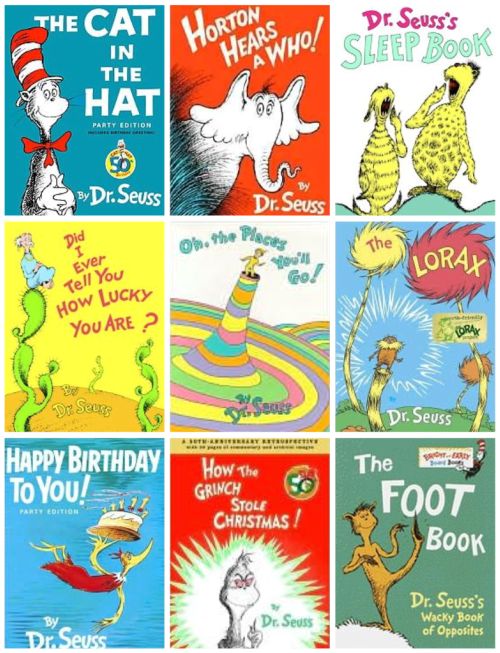
5) I am a massive Dr. Seuss fan! This one is actually kinda cheating because I recently introduced my boyfriend to Dr. Seuss (he didn't grow up in the US) and re-read Green Eggs & Ham and If I Ran the Circus along with him. Still so much fun (and I love the Seuss Land at Universal)!

6) Yes, the movie has an accompanying book and my obsession with dragons has had a long history.

7) We moved every two years when I was a child - I didn't have many close friends growing up. I think that's part of the reason for my obsession with the Sleepover Club books. Truth time: I loved these girls. They were like the childhood friends I never got to have.

8) Oh my gosh did I love this little guy when I was just a little girl.


I know this is supposed to be Top TEN Tuesday, but I have a really bad memory for my childhood - ask my younger sister who remembers lots of things I don't! So eight books is all I have for you - but you know if *I* remembered them, that has to be an excellent sign.

See you guys next month!

Wednesday, March 11, 2015

Cover Reveal: DRAGONS ARE PEOPLE, TOO by Sarah Nicolas

Today, we're revealing the cover for Dragons are People, Too, a young adult contemporary fantasy by our very own Sarah Nicolas, releasing April 28th from Entangled Teen. Read all the way through and scroll to the bottom for a giveaway.


Never judge a dragon
by her human cover...

Sixteen-year-old Kitty Lung has everyone convinced she’s a normal teen—not a secret government operative, not the one charged with protecting the president’s son, and certainly not a were-dragon. The only one she trusts with the truth is her best friend—and secret crush—the über-hot Bulisani Mathe.

Then a junior operative breaks Rule Number One by changing into his dragon form in public—on Kitty’s watch—and suddenly, the world knows. About dragons. About the Draconic Intelligence Command (DIC) Kitty works for. About Kitty herself.

Now the government is hunting down and incarcerating dragons to stop a public panic, and a new shape-shifting enemy has kidnapped the president’s son. Kitty and Bulisani are the last free dragons, wanted by both their allies and their enemies. If they can’t rescue the president’s son and liberate their fellow dragons before getting caught themselves, dragons might never live free again.

Add it to Goodreads


About the Author

Sarah is a 30-something YA author who currently lives in Orlando with a 60-lb mutt who thinks he’s a chihuahua. She believes that some boys are worth trusting, all girls have power, and dragons are people too.

She’s a proud member of the Gator Nation and has a BS in Mechanical Engineering, but has switched careers entirely. She now works as an Event Coordinator for a County Library and as a freelance book publicist and author’s assistant.

Website | Twitter | Facebook | Instagram | Tumblr


Giveaway

Since I couldn't have written any of this book without coffee, I'm giving away a $10 Starbucks Gift Card! (Open anywhere Starbucks Gift Cards can be used)

a Rafflecopter giveaway

And you can win a signed paperback copy from Goodreads!


Goodreads Book Giveaway

Dragons Are People, Too by Sarah Nicolas

Dragons Are People, Too

by Sarah Nicolas

Giveaway ends April 27, 2015.
See the giveaway details at Goodreads.
Enter to win

Tuesday, February 24, 2015

Top Ten Tuesday: My Top Ten Favorite Heroines From TV


Since my day happens to fall on Tuesday this month, I decided to do Top Ten Tuesday! This meme is hosted by The Broke and the Bookish. Today’s topic is Top Ten Favorite Heroines from TV!

1 - The Clones, from Orphan Black

If you've seen the show, no explanation required.


2 - Kenzi, from Lost Girl


Don't we all, Kenzi?

3 - Tamsin, from Lost Girl

Her character arc is one of the best I've ever seen.


4 - Kaylee, from Firefly

If you don't love her, you have no soul. My professional opinion.


5 - Petty Officer Anastasia Dualla, from Battlestar Galactica

This show has a lot of fantastic characters, but Dee had a quiet, steady strength that I think most people overlooked.


6 - Bo, from Lost Girl

Can you tell I love this show? A kick-ass, feminine, bisexual woman who doesn't apologize or agonize over her sexuality? Yes, please!


7 - Daenerys Targaryen, from Game of Thrones

Y'all know I couldn't leave out the mother of dragons.


8 - Claudia, from Warehouse 13


9 - The Pink Ranger, from Power Rangers

You go, girl! #notashamed


10 - Rocky Blue, from Shake It Up

Yes, I watch the Disney Channel. Don't judge me. I love Rocky!!


Monday, November 24, 2014

Yes, That's Spam; No, Don't Do It: How to Avoid Alienating Readers

We all hate SPAM. Every author knows that spamming potential readers is a surefire way to alienate them (RIGHT?) - so why do some insist on invading your online space with their advertisements?


It turns out, based on some conversations I had this week, some authors don't believe what they're doing is SPAM. So here's my handy-dandy, not comprehensive guide, called "Yes, that's spam."

1) Direct Messages

Unless you are having an actual conversation (not argument) or the person has asked you to DM her some information, resist the urge to send a private message on any social media site.

The absolute fastest way to get someone who may have been interested in your books to unfollow you is to send one of those gross "thanks for following messages" immediately after they follow you. Bonus points if it's obviously automated.

For ex:

Thanks for following me! Check out my newest release Stupid Book on Amazon! http://amzn.to/1C53u9V (service of @tweetspammerco)

*yes that is a link to my alter-ego's book. Hey, I needed a link for my example. And you're in my space, after all.

This is not limited to sales links! Telling people where to find your website or other social media, or even messages without links are still considered spam. Private messages are a place for conversation, not for promotion of any kind.

It's like: Those obnoxious phone calls just as you're sitting down to dinner

2) Posting on Someone Else's Virtual Space

Posting about your book on someone's Facebook Wall. Promoting your book on a FB group that has not specifically invited you to do so. Using the comments of another person's blog post to link to/talk about your book. Posting about your book in forums not specifically intended for that sort of thing.

Really, posting about your books on any online space that you do not "own" and you have not been specifically invited to use for that purpose is always a big no-no.

It's like: Walking around a book festival, slapping stickers of your book cover on people without asking.

3) Goodreads "Events" and "Book Suggestions"

I know that someone is telling you to use Goodreads Events to announce your book launch and that someone is telling you to use Goodreads Book Suggestion feature to suggest your own book to anyone who's naive enough to friend you.

Someone wants people to hate you. I want people to like you and I'm saying: don't do this.

Events should be an actual event that someone can attend (virtual events are a thing!), not just an announcement of a book launch. And the Book Suggestion feature's intended use is for people who actually know each other (again, online friendships are a thing!) to suggest books they enjoyed to other people they think might also enjoy them.

It's like: Those pieces of mail that make it look like you're going to get in trouble with the law, but really they're just trying to make you sign up for a loan.

4) Tags

Tagging people in a picture when it's just a promotional image for your book. Mentioning people in a tweet that is promo for your book (or even tweeting a bunch of usernames with something impersonal). Using hashtags meant for communities in promotional posts.

It's like: #2 on this list and also implying that the tagged person endorses your product.

5) Repetitive Promotional Messages

If you tweet the same message about your book every day with a link, rethink that strategy. Also, if you post only about your book and nothing else, mix it up. You may think this is ok because those people have chosen to follow/like you, but you're not building your readership this way. Either your readers are going to unfollow you, or your message becomes background noise.

It's like: a preacher giving the same exact sermon every Sunday.


If you are doing any of these things, you are without-a-doubt alienating potential readers. I know some authors will argue with me, but you're deluding yourself if you think these things are a good use of your promotional time. I promise you the number of books you may sell will never outweigh the books you will never sell because you made someone feel like a customer and not like a person.

Yes, that's spam. No, don't do it.