


This month, we're looking at marching our characters into battle. Now, I could take the obvious route and discuss good old fight scenes, but I'm pretty sure one of my other YATopian buddies will have that covered. So, instead, I'm going to consider the internal battlefield your MC has to contend with throughout the entire book.
It's important to know what your MC's internal battleground is. This is where you look deep at the root of your MC's conflict. What are the polar opposite feelings they have? Your character needs to struggle, so you need to think "opposing sides." Once you know the basic two emotional "armies" so to speak, you then need to break it down further. You don't have just side A and side B. If it was an actual army, they would be broken down into units - infantry, cavalry, etc. How does this relate to your MC's inner conflict? These are the layers of emotions you have. For example:
Say your character is in love with their co-worker, but they are both going for the same promotion. Perhaps you have chosen the opposing emotions of competitiveness and selflessness for your MC. Your character is competitive by nature and wants, needs perhaps for a physical reason, this promotion. However, they are selfless by nature, and this is the person they love they are competing against. So, what to do? What other emotions hide in there? Let's look at these armies...
Competitiveness
Infantry - fear of failure
Cavalry - desire to prove oneself
Artillery - sense of self-worth
Selflessness
Infantry -feeling like a good person
Cavalry - approval
Artillery - battling against the bad parts of their nature and trying to outdo them
Okay, so this is a simple example, but hopefully it will show that when you think of your MC's internal battleground, you can go past the basic conflict, and really dig in and find lots of layers to really bring your internal battlefield to life.
Saturday, March 10, 2018
Marching into battle


 Fiona McLaren is a displaced Scot living on the sunny island of Cyprus. She's an author, scriptwriter, and bibliophile, who participates in contests such as Pitch Wars.
The most important things in her life are her boys, her family, and her partner...and lots and lots of books!
She's represented by the wonderful literary agent Maura Kye-Casella at Don Congdon Associates.
Fiona McLaren is a displaced Scot living on the sunny island of Cyprus. She's an author, scriptwriter, and bibliophile, who participates in contests such as Pitch Wars.
The most important things in her life are her boys, her family, and her partner...and lots and lots of books!
She's represented by the wonderful literary agent Maura Kye-Casella at Don Congdon Associates.
Wednesday, February 28, 2018
Swoon-Worthy Characters of YAtopia
To wrap up our swoon-worthy month, a couple YAtopians so kindly gave us a peak into what makes their characters swoon-worthy.

Emily Moore's swoon-worthy character is named Vaku. Here's what she shared with us:
Thank you for sharing with us, Emily! If you want to connect with Emily Moore, you can find her here:
Email at emilygmoorewriter@yahoo.com
Facebook
Twitter
Blog/Website

Next we have Chris's swoon-worthy character named Stefan. Here's what he shared with us:
My most swoon-worthy character is 18-year-old Stefan from my YA Fantasy novel IN THE NAME OF MAGIC, which is the first book in a trilogy, and is forthcoming from NineStar Press this June. Stefan is the main character's love interest.
17-year-old Maximillian must offer shelter to his non-magical best friend (Katherine) while balancing his budding relationship with the evil queen's estranged younger brother, Stefan, in the backdrop of a contemporary fantasy Earth-like country plagued by a totalitarian monarchy.
Thank you for sharing Stefan with us, Chris! Keep your eyes peeled for IN THE NAME OF MAGIC coming in June 2018.
Have you written a swoon-worthy character? Tell us what makes them swoon-worthy in the comments!

Emily Moore's swoon-worthy character is named Vaku. Here's what she shared with us:
Vaku the desert elf rebel leader offers readers many opportunities to love him. Upon first meeting my main character Samana, he offers to help her rescue a friend against impossible odds, cleans her wounded hands, and feeds her before she disappears.
Two years later, they reunite. She accidently kills him with her unpracticed magic and revives him with the same magic. Despite this, Vaku offers a comedy relief to Samana’s serious and pessimistic character, often teasing her with passages from the Great Essence’s prayer when she is obviously not exemplifying them.
His fierce protective instincts for Samana reveal themselves in sacrificial ways: leaving the rebellion seat to go with her to the enemy’s cliff city, degrading himself to a servant of the household that he despises, giving Samana his beloved knife and teaching her self-defense, and shaving his unique red hair in an effort to blend in and stay close to Samana. Lastly, battle scars are sexy; Vaku’s amputated hand lends him a broken quality that makes his easy-going nature that much more endearing. I’d call Vaku incredibly swoon worthy!
An excerpt from my W.I.P. “Samana’s Flair”:
"Don't you dare try to get into the Holding Place. You will get yourself trapped inside," Vaku predicted, shaking his finger playfully at her.
"Don't tell me what I can't and can do!" Samana snapped, widening her nostrils. How dare he. Just like all the other wonderers she’d ever known besides Dimerez. Determined to tell her who she was and where she didn’t belong. She wasn’t a child.
"I'm just saying, me and the cart might not be there to hide you next time," Vaku jested with a snicker.
Samana jumped to her feet with a snarl.
"I don't need you or anyone else to tell me what to do. I will make it on my own. Thanks for the bread," she huffed, stomping further down the path toward the Chief’s Walk. The wide road wound out across the desert toward Benami’s farms and rock formations.
"Don't be like that," Vaku said, following her. "What are you so mad for?"
Samana paused to look back at him. The flickering of fire on the yucca window coverings of the surrounding pueblos only slightly illuminated Vaku's grin and raised eyebrow. She almost returned the smile, but instead let out an anger-diminishing breath. Shaking her head, she mumbled, "I have to go."
"May you walk gently!" Vaku called after her as the night's bitter-cold air singed her skin.
Thank you for sharing with us, Emily! If you want to connect with Emily Moore, you can find her here:
Email at emilygmoorewriter@yahoo.com
Blog/Website

Next we have Chris's swoon-worthy character named Stefan. Here's what he shared with us:
My most swoon-worthy character is 18-year-old Stefan from my YA Fantasy novel IN THE NAME OF MAGIC, which is the first book in a trilogy, and is forthcoming from NineStar Press this June. Stefan is the main character's love interest.
17-year-old Maximillian must offer shelter to his non-magical best friend (Katherine) while balancing his budding relationship with the evil queen's estranged younger brother, Stefan, in the backdrop of a contemporary fantasy Earth-like country plagued by a totalitarian monarchy.
Stefan is swoon-worthy because of his mysterious personality when readers are first introduced to him in Chapter 1 upon him meeting the main character (Maximillian). Stefan is evasive, yet I was careful for him not to be one-dimensional. He doesn't use his past to justify bad decisions; he's just damaged because of his past toxic family dynamics. Stefan also wears a half-mask for a third of the book, which is a physical symbol of his vulnerability.
Furthermore, Stefan is swoon-worthy because of how he always gives his boyfriend, Maximillian, the benefit of the doubt--even when some people might not. Including when Maximillian fibs about the real reason he agrees to a weekend getaway with Stefan.
Thank you for sharing Stefan with us, Chris! Keep your eyes peeled for IN THE NAME OF MAGIC coming in June 2018.
Have you written a swoon-worthy character? Tell us what makes them swoon-worthy in the comments!
Sunday, February 25, 2018
GUESTOPIA: Australian Author, Allayne Webster
I'm thrilled to welcome to today's Guestopia spot a very successful Australian author and dedicated supporter and mentor within the Australian writing community. Please meet...

Allayne’s middle grade title, Paper Planes (Scholastic) was a 2016 CBC Notable Book and shortlisted for the Adelaide Festival Children’s Awards for Literature. Her other titles have appeared on similar lists, including the Inkys and the Premier’s Reading Challenge. In June 2017, Allayne released a middle grade novel, A Cardboard Palace (MidnightSun Publishing) and Swedish rights have been sold. On 29 January 2018, she’ll release a YA novel The Centre of My Everything with Penguin Random House, and in February 2018, a junior fiction novel with Scholastic, Sam’s Surfboard Showdown, co-authored and illustrated by her sister, Amanda S. Clarke.

Which publisher snapped up your book?
This novel has burned in me since childhood. It’s dedicated to my step-father
 (whom cared for me from the age of five) and
it explores issues close to my heart. Love is a great
motivator, and I’ve written this story as a means of reflecting my love for my step-father and all he has ever done for me.
(whom cared for me from the age of five) and
it explores issues close to my heart. Love is a great
motivator, and I’ve written this story as a means of reflecting my love for my step-father and all he has ever done for me.


ALLAYNE WEBSTER
Allayne
grew up in the coastal fishing town of Kingston South East, South Australia. She’s
the recipient of three SA Arts grants, a Board Member of the Salisbury Writers'
Festival, and she helped to establish the Women's Professional Development
Network Book Club at the University of Adelaide.
Allayne’s middle grade title, Paper Planes (Scholastic) was a 2016 CBC Notable Book and shortlisted for the Adelaide Festival Children’s Awards for Literature. Her other titles have appeared on similar lists, including the Inkys and the Premier’s Reading Challenge. In June 2017, Allayne released a middle grade novel, A Cardboard Palace (MidnightSun Publishing) and Swedish rights have been sold. On 29 January 2018, she’ll release a YA novel The Centre of My Everything with Penguin Random House, and in February 2018, a junior fiction novel with Scholastic, Sam’s Surfboard Showdown, co-authored and illustrated by her sister, Amanda S. Clarke.
Great
to meet you, Allayne. Let’s get the interview underway.
Is
this your first published book?
This is my third YA novel, seventh
publication.
What’s
it called?
The
Centre of My Everything
Which
genre/age group?
Contemporary YA realism. Upper YA.
Is
it a series or standalone?
Standalone.
Are
an agented author?
I am now. I wasn’t when this novel was
accepted.
Which publisher snapped up your book?
Zoe Walton, Penguin Random House.
How
involved have you been in the whole publishing process of your book?
Working with PRH has been nothing short of
brilliant. They’re communicative, inclusive and considerate. I feel like I’ve
been consulted at every turn. I’ve relished the experience.
Do
you have another job?
When I first began writing this book eight
years ago, I worked fulltime in administration at The University of Adelaide.
Approximately three years ago, I quit to write fulltime—and to finish this
bloody book!
Did
you receive many, if any, rejections prior?
I lost count of the rejections. However, it’s
a bit like the famed number of rejections JK Rowling received. When recounting
that story, what they don’t focus on is how many times she polished that
manuscript prior to the next submission. Essentially, I kept working until I
got it right.
What
created/what were you doing or watching when the first idea for this book sneaked up on you?
This novel has burned in me since childhood. It’s dedicated to my step-father
How
long did you plot/plan until you started writing it?
There certainly wasn’t an architectural
approach to this novel. I sat down, started writing and let the voices/scenes
etc come to me. In hindsight, it’s probably why I took so long to get the damn
thing right!
Once
you started, did the story flow naturally or did you have to step in and
wrestle it into submission?
I think I earned a black belt with this baby.
It was thoroughly disagreeable from start to finish.
How
many drafts did you write before you let someone read it? Who was that someone?
I read a very early version of this
manuscript to a crowded Women’s Breakfast, going back some seven years ago.
Judging by the reception, at that point, I hadn’t got it right. I recall many
grimacing faces staring back at me. I suspect attendees were conservative and
found the language and the things I portrayed crass and confronting. Not long
after that, I let my friend/author, Vikki Wakefield, read it. There were years
between Vikki reading the initial version and the final one, however. Don’t ask
me how many drafts there were during that period – I lost count!
Did
you employ an editor/proofreader or did you have a critique partner/beta
readers before you started querying?
No. Somewhat stupidly. Maybe I would’ve had
earlier success had I done this. I was arrogant. Delusional. Excitable. I always blow early.
Roughly
how many drafts did it take before you sent the manuscript off into the real
world?
I lost count. I shipped it round to everyone,
polishing between each submission. In hindsight, I was an overzealous idiot. I
sent it out before it was ready. (See above – I always blow early!)
How
many drafts until it was published?
If you mean drafts with the publisher, I’d
say once it was accepted, there wasn’t much to do structurally. It was more ‘on
the line work’, plus inserting/reviewing a handful of scenes. There were
probably six or seven rounds of shipping it back and forth to the publisher.
Has
the book changed dramatically since the first draft?
Absolutely. The current version is told from
four POVs. Initially, there were eight. Eight!! What the hell was I thinking? That, and during the editorial
process approximately 10,000 words were cut.
Are
there any parts you would change even now?
I doubt any author is ever completely
satisfied with the final product. We’re forever nitpicking. However, there
comes a time when you need to step back from your painting and put down the
brush. I imagine that in years to come I’ll revisit this work and think I could
have done this, done that. (I’ve done that with other stories!) But that’s the
benefit of hindsight, and when you’re in the thick of it, it’s impossible to
have such clarity.
What
part of writing do you find the easiest?
Character and dialogue.
What
part do you find the hardest?
Setting description. I suck at it. It’s like
pulling teeth. But maybe that’s indicative of how I read; if there’s a
paragraph devoted to how the sun/sky appeared, I’ll skim it and skip to the
action. I’m impatient like that. The prose has to be utterly captivating to
keep my attention.
Do
you push through writing barriers or walk away?
I’ve been publishing for ten years now. During
that time I’ve learnt that a ‘barrier’ is simply a problem that requires
solving. You may have written yourself into a corner and need to unpick a whole
scene and rewrite it before you can proceed. You may be unable to see the way
forward in the direct instance, but you can see the bigger picture. It boils
down to finding the answers. Sometimes it takes months for the penny to drop.
Afterwards, you find yourself thinking, Why
was that so hard?
How
many projects do you have on the go at the same time?
Usually multiple projects. If one isn’t
working, I revert to the other. And if that isn’t working, I pick up my guitar
and write music.
Do
you think you are born with the talent to write or do you think it can be
learned?
I think storytelling is a skill largely learned
in early childhood and dependent on a need
for that skill. As a kid, out of necessity, (for reasons I won’t bore you with),
I became good at stretching the truth or telling versions of it. Also, I was
surrounded by family members, particularly my Nanna, who knew how to tell a
good yarn. Growing up in a small country town, I was drawn to books and stories
as a form of escapism and proof of a big, wide world outside the narrow
confines of my existence. It wasn’t until I discovered the work of Judy Blume
in my early teens that I realised the power of story and that it can be used to
changed hearts and minds. That’s when I really
fell in love. Story could be used for advocacy! I’m still not convinced I know
how to write, but I know I have an ability to thread together a good tale.
How
many future novels do you have planned?
As many as I can produce before I’m stalking
(make that shuffling) the halls of a
nursing home.
Do
you write other things, such as short stories, articles or blogs?
Nope. Lazy, aren’t I? As part of my last role
at the Uni, I wrote the research stories of academics, translating complicated
projects into ‘plain speak’ and delivering it in an entertaining journalistic
way.
What’s
the highlight of being published so far?
Where do I start? Being surrounded by creative
types, many of whom I consider the real deal (rather than myself who is just a
hack.) Forming friendships with those writers/artists. Meeting Jimmy Barnes (*I
wrote a junior fiction book, Barnesy,
and he signed it for me – squeal!!!) Receiving autographed books from Judy
Blume (because I wrote to her and told her it was she who inspired me to become
an author.) Getting to talk to school students about writing. Working in my trackpants.
That moment when the box of books finally arrives, you cradle them for five
minutes, staring with wonder at what you created, and then someone asks you, Mum, what’s for dinner? Giving voice to people not blessed with the
skill of storytelling, like my friend, Jarko, whom I wrote about in Paper Planes. (Jarko is a Bosnian
refugee.)
Give
me one writing tip that works for you?
Write about what fires you up. Underpin your
work by exploring something you want to say or an idea you want to convey. If
you’re passionate and you care, the words should flow.
And
one that doesn’t.
Some folk enjoy writer’s prompts. I can’t
think of anything worse. I loathe being put on the spot and being told to
create something at will. I dodge any writer’s course that lends itself to this
task. Or excuse myself to go to the bathroom.
Can
you give us a clue or a secret about the next book?
I have two in the works: one contracted, the
other a WIP. The contracted one is an early YA novel with a personal bent,
exploring my teenage years battling chronic illness. (Which extended into
adulthood.) The WIP is my first crack at comedy, and about a bunch of misfits
thrust together on a road trip across rural SA.
Such
great insight into your books and your writing life, and congratulations on your many successes so far. Thanks so much for
joining YAtopia today, Allayne, and we wish you all the luck with your books,
old and new!
If
you would like to find out more about Allayne’s work or to keep up to date with
her new releases or get yourself a copy of her books, these links should do the
job.

Thursday, February 22, 2018
Naming your Love Interest
Whenever I hear a good name, I try and memorise it in case it fits one of my future characters, much like some people do with future children. There's nothing I love more than finding the perfect name for my protagonist and knowing it's "the one." (It also provides hours of procrastination instead of actually writing...) But how do you find their perfect name?
When naming the love interest, I used to try and find a name that "went well" with my protagonist’s, but I quickly realised I was going about it all wrong. Your love interest will only work if they are a well-rounded character of their own BEFORE they meet your protagonist. Which means they need to have a name that stems from them (or their parents) rather than anything to do with your protag. Of course, if your protagonist is obsessed with a certain name, then your love interest's name might actually stem from them, but that's a rare event that I've only ever seen used in the genius play, The Importance of Being Earnest.
Choosing a name
Parents
Your character's full, official name would have come from their parents or legal guardians (we'll come back to nicknames), so you need to consider their heritage and parents' backgrounds. That includes race, religion, geographical background, social status, parents' values and even trends at the time when your character's parents would have been choosing their child's name. There's nothing worse than a 'Zane' popping up in a historical period novel.
Surname
British surnames often stemmed from old professions, so they are very important to consider when naming your characters. Even in fantasy, you have to know where your characters' surnames come from. Different cultures have different naming systems, such as "firstname" of "family name" or "father's name." If you do your research before choosing your characters' naming system, you can make sure their heritage is properly represented through the positioning or lack of a surname.
Nickname/chosen name
This is where you can solely look at your character and show what they think of themselves. Do they flaunt their given name, instead takeing a ludicrous nickname in rebellion of their parents/cultural expectations/ social standing/ political alignments? Are they trying to be ironic? Do they want to stand out so take an unusual nickname? Or are they in fact trying to blend in? A character's chosen nickname can reveal a lot about his or her personality in just one word. Contrast it to their given name and you open up another revealing window into their world view.
Given nickname
For obvious reasons, any nicknames that are given to your love interest (or any character) by others reveals how they are perceived by the world and therefore can hint at their character traits to the reader without having to expose them completely right away.
Character
Although your love interest will have realistically been named by someone else, you can do a Charles Dickens and hint at their personality through their given name. After all, most people suit their names, right? Think about sounds and connotations when trawling through that baby names website. Soft sounds like "S" and "F", will evoke different ideas of a character's personality than harder sounds like "K" or "T". Same rule with vowels and consonants.
Of course, you might want to invert all of this and call your character something that totally flaunts the rules! But the point is, you'll know why you're doing it, and that will show through in your writing. And as you might have noticed, this post could be related to any character, not just the love interest, but it's February and the theme is love so...... enjoy!
Tuesday, February 20, 2018
Compiling a swoon-worthy love interest
A small note first before I kick off into my post. I've been absent from posting with YAtopia for a while. On one hand, I am sorry to my fellow YAtopians and readers, but on the other hand, I needed to take time out for some self care. I'm not in a position to talk about what's happened in my life over the past six months or so, but there's been some major changes and adjustments, and my head hasn't been in writing or blog posts. But I'm back, and hopefully the words will keep flowing.
So, swoon-worthy love interests and how do you put them together. You take a a dash of humour, a hot-looking guy with caring tendencies.
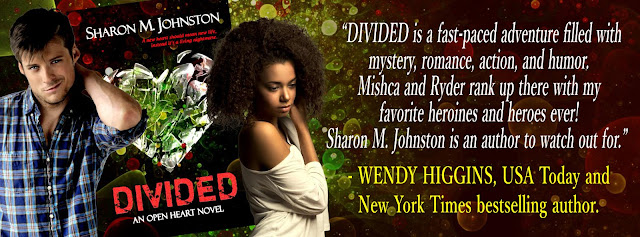
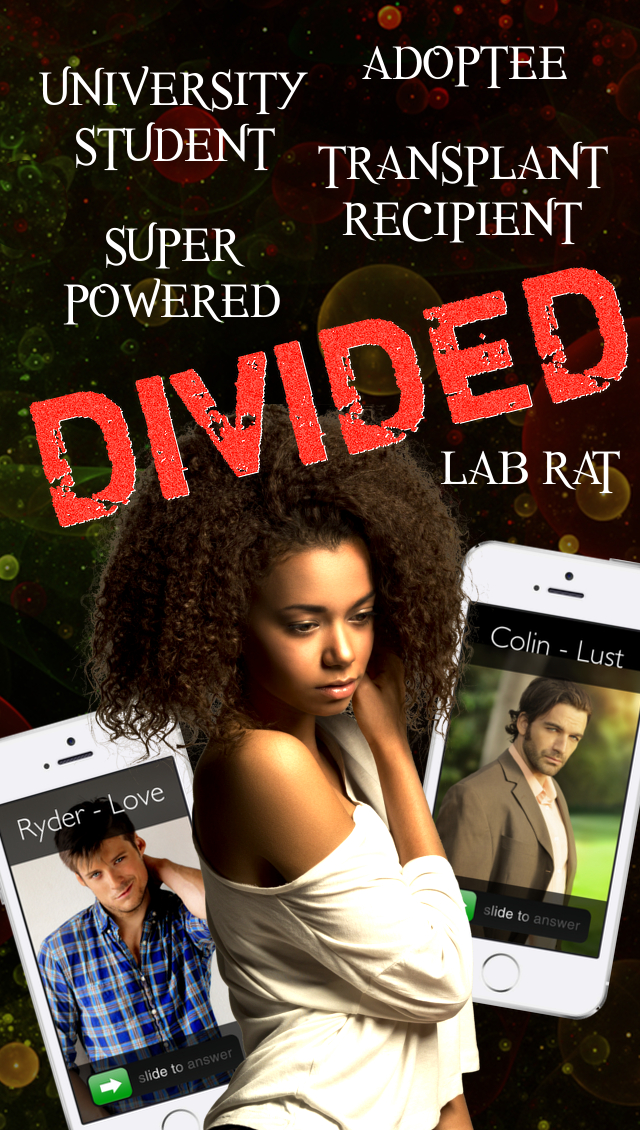
When I was writing Ryder, I did a search online and ended up with finding a picture of a guy called Daniel Conn, a tattooed rugby league player from Australia. He formed the basis of Ryder's looks for my character profiles, and I went with it from there. And you can see what I went with for promo material below for his character.

Then his personality. Well, shamelessly I did draw a lot from my husband. We have this playful teasing banter (and as I write this he just made a 'what?' joke - a standard for when we want someone to make less noise), and I went with that for the dynamics between Mishca and Ryder. And one of the grammar jokes I stole from my sister, who is an English teacher.
Started with those basics, I let Ryder's character take himself where he needed to. And honestly, I didn't expect how much 'Team Ryder' readers would be. I don't think anyone is Team Colin (poor Colin - he's the reason the story exists).
You can find out more about Ryder in DIVIDED...
And in SHATTERED...
Sharon M. Johnston is an author from sunny Queensland, Australia. She writes YA and NA SciFi and Fantasy, and other genres mashed up together. Yo can find her on Twitter.

So, swoon-worthy love interests and how do you put them together. You take a a dash of humour, a hot-looking guy with caring tendencies.
When I was writing Ryder, I did a search online and ended up with finding a picture of a guy called Daniel Conn, a tattooed rugby league player from Australia. He formed the basis of Ryder's looks for my character profiles, and I went with it from there. And you can see what I went with for promo material below for his character.
Then his personality. Well, shamelessly I did draw a lot from my husband. We have this playful teasing banter (and as I write this he just made a 'what?' joke - a standard for when we want someone to make less noise), and I went with that for the dynamics between Mishca and Ryder. And one of the grammar jokes I stole from my sister, who is an English teacher.
Started with those basics, I let Ryder's character take himself where he needed to. And honestly, I didn't expect how much 'Team Ryder' readers would be. I don't think anyone is Team Colin (poor Colin - he's the reason the story exists).
You can find out more about Ryder in DIVIDED...

And in SHATTERED...
 |
| Sharon M. Johnston (right) at the launch of SHATTERED |
Sharon M. Johnston is an author from sunny Queensland, Australia. She writes YA and NA SciFi and Fantasy, and other genres mashed up together. Yo can find her on Twitter.

 Sharon M. Johnston is an author and public relations specialist who lives in sunny Queensland, Australia.
She has been a Pitch Madness host for the past few years, and is also a Pitch Wars mentor.
Her New Adult Sci Fi Romance, DIVIDED: An Open Heart Novel Book 1, is out now with City Owl Press.
Sharon M. Johnston is an author and public relations specialist who lives in sunny Queensland, Australia.
She has been a Pitch Madness host for the past few years, and is also a Pitch Wars mentor.
Her New Adult Sci Fi Romance, DIVIDED: An Open Heart Novel Book 1, is out now with City Owl Press.
Friday, February 16, 2018
Stelena Will Always Be Swoon Worthy
The theme
for February blog posts is swoon worthy, and I’d like to discuss one of the
most swoon worthy couples from pop culture—Stelena (Stefan and Elena) from the
television show The Vampire Diaries (TVD). A television show can still be a
good learning tool for writing a YA romance because the audience of TVD is YA.
One thing
that makes Stelena a swoon worthy relationship, and more epic couple than
Delena (Damon and Elena) is that Stelena had more substance. From the second
Delena got together in Season 4, they just kept hitting the sheets—as if that
is a substitute for Damon ever becoming a better person or for a substance to
develop in their relationship. That is not to say that sexual content is bad.
It isn’t. And it deserves its place in pop culture (including YA pop culture)—but
sex does not equal a relationship. So, while Stelena might not have hit the
sheets that often when they date, at least they have substantial scenes—like
when Stefan reveals to Elena that he’s a vampire (early on in Season 1) because
he doesn’t want to lie (despite how he might risk alienating Elena).
Another
reason why Stelena is a swoon worthy couple is because they are not toxic. When
Elena is with Damon, she’s a different person. Sure. An argument can be made
that being with Elena makes Damon a better person. But Elena should not become
a different person just because of the man she’s dating. For example, part of
the way she becomes a different person is that she no longer cares about
morality when she’s with Damon. Like in Season 5 when Damon once again
threatens the safety of Elena’s brother, Jeremy, yet Elena doesn’t seem
bothered. Also, the old mantra, “if it quacks like a duck and walks like a duck,
then it’s duck” applies. In Season 4 Episode 23, Elena admits her choice to be
with Damon is probably going to be the biggest mistake of her life. Well, news
flash: but that’s not exactly a good thing to feel about a relationship.
Furthermore, viewers see Stefan’s morality because he puts being a good person
above dating Elena when he bargains with Klaus for his blood so Damon’s fatal
werewolf bite can heel. That kind of deed reveals character since Stefan puts
his brother’s wellbeing over his romantic desires.
Respect is
another important element of a swoon worthy relationship. And I’m not just
talking about consent with sex. Consent applies to other situations too. For
instance, towards the end of Season 2, Stefan didn’t force feed Elena vampire
blood so she can come back to life when she is in danger, yet Damon force feeds
Elena his blood despite her not wanting to be a vampire. Sorry. That’s gross. Respect
is also present after Stefan and Elena break up. He never challenges her
decision to be with Damon whereas Damon never respects boundaries and always
flirts with Elena when she dates Stefan from Seasons 1 to the beginning of
Season 4. The contrast is clear. Life does become grey at points, but not to at
the expense of disrespecting boundaries.
Anyway,
the above is just my initial thoughts about why Stelena is more swoon worthy
than Delena, as I have barely scratched the surface on the topic. The point is,
having a good guy as a love interest should not be frowned upon when writing YA
fiction. Sometimes the nice guy really is the better man.
Subscribe to:
Posts (Atom)


