Showing posts with label jaquira. Show all posts

Wednesday, May 8, 2013

Writing Basics: Plot

Summer’s almost here. (Seems like an odd thing to write, considering that I just survived the longest winter in the history of the human race since the last ice age. Basically, it was winter here in Wisconsin until just last week.) In preparation for summer, when so many of us will be starting new projects, I decided to start a series of posts that will be all about plot: plotting a novel, the parts of plot, subplots, Aristotle vs. Freytag, exposition, climax, resolution, etc…

So let’s start with the very basics.

First, what is plot?

Plot: the events or actions that take place in a story or novel.

According to Freytag (that’s Gustav Freytag the writer) a dramatic work (a novel) has five main parts: the exposition, the rising action, the climax, the falling action, and the resolution.


For this month’s post, let’s focus primarily on exposition.

Exposition:

This is the opening of the novel, where the main character is introduced in his/her ordinary world. Depending on the length, style, and structure of the novel, the exposition is usually the first 20% to 25% of the book, though this number can vary. As we approach the end of the exposition—let’s call this “page 25”—a conflict is introduced. This is sometimes called a “trigger” or a “plot point.”

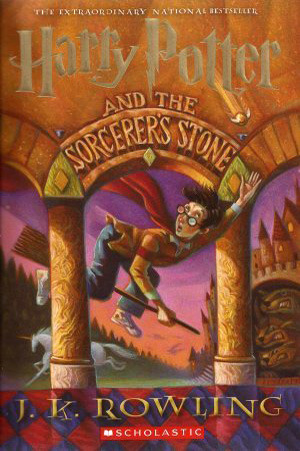
For example: in Harry Potter and the Sorcerer’s Stone (or Philosopher’s Stone) this is where we meet Harry Potter and the Dursleys. We get to know all about Harry’s life as an orphan, how he is mistreated by his aunt and uncle, how he has to wear Dudley’s hand-me-downs, and how he sleeps in the cupboard. And then, something happens to change Harry’s life, something that sends the ordinary world spinning in another direction. The trigger: Harry gets an owl, a letter that changes his life. This sets the plot in motion. 


Another example: in The Hunger Games, we open with Katniss and Gale hunting. We learn all about Katniss—how she and Gale are hunting partners, how there are fences surrounding their district, and that two tributes will be chosen. Everything is going fine (as fine as things can go in a Hunger Games universe) until the tributes are chosen. Prim is chosen as tribute, which “triggers” what happens next: Katniss volunteers as tribute. This sets the plot in motion. 


And finally: Breaking Bad. (Because it’s awesome. Also, pink teddy bear! Who doesn’t love pink teddy bears?) In Breaking Bad, during the exposition, we meet Walter and his family, we learn all about his job as a high school chemistry teacher, and his second job at a car wash, where he is mistreated by his boss. Everything is going fine (again, as fine as things can go in a Breaking Bad universe) until Walter’s life is changed forever. The trigger: Walter is diagnosed with lung cancer. This sets the plot in motion.


Plotting:

As you’re plotting your novel, think about the trigger. What will set the plot in motion? What could force your main character to make a life-changing decision? Think about your favorite books. Go back to them and pay special attention to how the author handles the exposition and the trigger, and how much of the setting is revealed/described during the first 25% of the book. Go back to your favorite TV shows and watch the pilots. How long before a conflict is introduced? How many characters are we introduced to during the exposition? When does the first plot point happen? 


Thursday, March 7, 2013

A Conversation with Sci-Fi/Adventure Writer Shima Carter


Most of you have never heard of Shima Carter. Yet. Do not despair. I’m here to remedy that!

Shima and I first met a few years ago, when we were both grad students at the University of South Florida’s MFA program in Creative Writing. We were in several fiction and creative nonfiction workshops together, and we also worked as editors of USF’s literary magazine, Saw Palm: Florida Literature and Art. We’re also in a writing group together (a group that has been incredibly helpful for me personally, since they’ve held me accountable and kept me sane).

Last summer I had the pleasure to read from (and fall in love with!) the first draft of Shima’s novel. She’s continued to work on it since then, and should be querying agents soon. And when that happens, she will SET THE UNIVERSE ON FIRE—mark my words, world wide web: Not only is the story gripping, smart, and fun, but the writing is fantastic!

But before the world is crispy-fried*, we get to talk to her about writing, her Sci-Fi/adventure novel, and sandwiches! What could be better than that?    


Shima Carter


*Yes. Crispy-fried. This is a thing.

Jaquira: Where do you write?  What does your writing space look like?  Is there anything you can’t write without?

Shima: I almost always write in my home office.  It’s convenient when I only have a few minutes and it’s quiet (a definite must for me).  Besides my laptop, my desk often has on it an embarrassing number of stacks of things to-do, an assortment of dessert-smelling candles, and a large glass of water.

I could write without Gator, my son’s black lab, but I wouldn’t want to.  When he rests his warm, slobbery face on my foot, I feel like he’s silently cheering me on.

Jaquira: What is the title of your book or work in progress?

Shima: I’m currently working on a book titled ARCHIMEDES AND THE DARK ENERGY.  

Jaquira: What is your book about?

Shima: ARCHIMEDES AND THE DARK ENERGY is an adventure novel about a 13-year-old boy named Archie who is sent on a quest to save his sister from a mysterious kidnapper. He and the kidnapper are linked through a set of devices, developed by his scientist father, that hurl him through space to different historic sites around the world. Along the way, Archie discovers that his father may not always have been the man he’s known. And, if Archie is to succeed and save his sister, he will have to decipher the clues his father’s been leaving him his entire life.

Jaquira: I’ve come across some online chatter that suggests agents/editors are looking for “boy books,” and while this is definitely a book that boys will LOVE, I think it will appeal to any gender. Also, it sounds like a major blockbuster! Who would you cast to play your characters in the movie?

Shima: Although he’s too old now, I think Logan Lerman would have been an ideal choice to play Archie in a film version of the book. 


Lerman in Percy Jackson and the Olympians


In Percy Jackson and the Olympians: The Lightning Thief, Lerman effectively embodies a bewilderment and heroism that Archie’s character might feel when he finds himself being teleported to mystical places and as he tries to unravel a mystery steeped in modern science and ancient history.

I also thought Lerman did an outstanding job in The Perks of Being a Wallflower, portraying a level of vulnerability and sensitivity that would be consistent with Archie’s character as he yearns to save his sister while grappling with who he is, who his father was, and how they did and didn’t connect with one another.        

Jaquira: Yes! The Perks of Being a Wallflower is one of my all-time favorite YA books. I love the movie (though I prefer the book).  Which books were the most influential to you as a young reader?

Shima: As a pre-teen, I was NEVER caught without a book.  Some of my favorites were and still are A Wrinkle in Time, Anne of Green Gables, Little Women, Eight Cousins, The Dragonriders of Pern, Black Beauty, To Kill a Mockingbird and Lady of Avalon.

Jaquira: To Kill a Mockingbird! That is still one of my favorites. Can you talk about how you got the idea for your book?

Shima: I’m intrigued by creation myths, and how science, religion, and cultural beliefs intersect, so I think that influenced my writing quite a bit. Similarly, I love to travel and experience new cultures and communities, which I hope came through in Archimedes and the Dark Energy as well. 

For me as a child, the cartoon Where is Carmen Sandiego? was second only to He-Man and the Masters of the Universe, which, I believe, explains a lot about where the idea for the book came from. Ultimately, though, the impetus to write the book came from my desire to tell a story my twelve-year-old son, Zion, would read while he was still young enough to be interested in something his mom had written. 

Jaquira: Which one of your characters has the most of you in him/her?

Shima: Deja’s character is definitely the one most like me. She’s competitive, athletic, respectably intelligent, and more than a little hot-tempered and snarky. 

Jaquira: That definitely sounds like you! (Although, I’ll admit, I’m glad I never had to come across hot-tempered Shima.) So here’s an unrelated—though totally relevant—question that’s not really a question: A famous New York City deli wants you to create and name a sandwich. Go!

Shima: Try The Amazing Mumford: Crunchy peanut butter, banana slices, and maple syrup wedged between two thick wheat pancakes cut like slices of bread. (Side of milk recommended).

Not sure if it qualifies as a sandwich, but I’m more of a breakfast person.  As for the sandwich’s name, it’s a shout-out to an old friend from Sesame Street. 

Jaquira: That sounds delicious! (And I will be making that at home.) Here’s the one I came up with: Chocolate-hazelnut spread (hold the palm oil and the deforestation) and creamy peanut butter on Puerto Rican pan sobao from a little bakery called El Burrito in Aguas Buenas.   


Tuesday, January 8, 2013

Writing Basics: Dialogue

Last month I talked a bit about diversity in YA and MG, and asked for some recommendations. Thanks so much to those of you who replied either in the comments or directly. I am in the process of compiling a list. If you have any recommendations, feel free to leave them in the comments. (I sure would appreciate it!)

But in the meantime, let’s talk about writing. For my first post of the year, I decided to start with some writing basics: on writing dialogue. Let’s take a look at different ways of writing dialogue:

Direct dialogue:

Here are a couple of examples of direct dialogue.

Example A: 

“Magic is not something to play with,” my mother said.
“Why not?” I asked.

Example B:

My mother kicked her slippers off. “Magic is not something to play with.”
I cringed at the mess she left on the floor. “Why not?”

Notice where the , and ? and “ ” are.

Also, in contemporary fiction, characters don’t exclaim, suggest, mutter, sigh, or laugh their dialogue. They simply say/said it, or ask/asked it. If you must have a tag line, make it said/says or asked/asks. When possible, try not to use tag lines at all.

Indirect, implied, or reported dialogue:

Sometimes, depending on the voice and style, you may want to use indirect dialogue rather than direct. The following are some examples of indirect, implied, and reported dialogue:

A:
My mother always said that magic was not to be trifled with, that it was a serious thing.

B:
Magic is not to be trifled with, my mother always said, and I believed her.

C:
Then she told me that I shouldn’t play with magic, that I should take it seriously. I wish I’d listened.

D:
Magic should be taken seriously, my mother says every time she catches me tossing rats’ eyes into the cauldron.

E:
I shouldn’t play with magic, my mother says. I should respect its power and read the Book of Shadows every morning. With great power comes great responsibility. Yes, just like Star Wars++, she says. My mother is such a nerd.

SOME NOTES ON GOOD DIALOGUE:
  • Dialogue should be believable. Try reading your dialogue aloud to another person, or have another person read it back to you in order to determine if it rings true. 
  • Dialogue should advance the action of the story without stating the plot. Don’t try to use dialogue to give readers a summary of the plot, or to “explain” things. 
  • In fiction, characters don’t always say what they’re thinking. People sometimes hide their true feelings or agendas. 
  • Dialogue should reveal something about character in a subtle way, without trying too hard. 
  • Don’t overuse characters’ names. It sounds unnatural. 

Which of these examples works (or “sounds”) better?

Example A:

When I got home from prison, Lola was waiting for me on the front steps.
“Hi, Jamie,” she said. “You’re home from prison.”
“Hey, Lola,” I said. “Yes, Lola, I’m home after being in prison for a year because I ran somebody over with my car and didn’t stop.”
“I missed you while you were in prison, Jamie. I never went to visit because I was busy raising kids and taking care of your brother who is also my husband and by the way we’re expecting! Again!” Lola said.
“I missed you, too, Lola. That year I spent in prison was really tough. Congratulations!” I exclaimed.
“Jamie, were you hurt while you were in prison and I was here raising the kids and taking care of your brother?” Lola asked.
“I don’t want to tell you, Lola,” I said. “I’m embarrassed.” I walked away.
“Please tell me, Jamie. I’m your friend. Jamie, I’m here for you.”

Example B:

When I arrived, Lola was waiting for me on the front steps.
“You look like hell,” she said.
“Thanks. I just got out of prison. What’s your excuse?”
“Got knocked up by your good-for-nothing brother.”
“Figures.”
“So how was the prison food?”
“Nothing to write home about. But better than your cooking.” I went inside.
“Dang, girl. You can’t just slap that bulldog and leave the room!”

(Note: no bulldogs were hurt during the writing of this example.)

++Just making sure you were paying attention.


Saturday, December 8, 2012

What We Talk About When We Talk About Diversity in YA and MG: A Call to Action


There’s been a lot of talk about the lack of diversity in publishing lately, and I don’t mean just YA and MG. This is an ongoing discussion in (adult) literary fiction circles, too. 
  
It’s almost 2013. Why are we still talking about this?

Well, there’s this:

On Dec. 4th, The New York Times published this article about Latino children who fail to find characters like themselves in books.

And there’s this:


What is the relationship between these two? Well, that’s a good question. (I’m interested in hearing your responses in the comments.)

But when we talk about the lack of diversity in YA and MG, we’re not just talking about the lack of main characters who are people of color. We’re also talking about characters that identify as LGBTQ, who have disabilities, who come from bilingual or multilingual families or communities, and from various faiths or religions.  

There’s been a lot of talk about book covers and the whitewashing of the publishing industry and privilege and educational inequality. But for readers and writers who are underrepresented, talking about it is not enough. Something needs to change.

So what can we do?

For starters, you can make it your mission to read widely and diversely. You can recommend these books to readers. You can put these books in readers’ hands. You can ask for these books at your local library or independent book store or wherever you buy books. You can review these books and blog about them. You can write these books. You can publish these books.

Also, here’s a starting point: back in August, Roxane Gay, one of my favorite writers (who is also a fantastic essayist, cultural critic, blogger, and superwoman) compiled this list.

Now, here’s where you come in. I want to compile a list for YAtopia—a diverse YA and MG list for readers of underrepresented groups. So let’s get started. What are your recommendations?        


Thursday, November 8, 2012

On Watching TV Like a Writer: The Walking Dead


Want to learn about character arcs, plot, themes, and continuity? Watch TV. Or, to be specific, watch The Walking Dead. (You knew that was coming, didn’t you?)

I confess, I LOVE LOVE LOVE The Walking Dead. I don’t think I could possibly love it more. Maybe if all the main characters were teens, or if they suddenly decided to flash back a few months to show how the zombie outbreak was unleashed during prom. I’m just saying. (Also, are you listening, bigwigs of TWD universe?)

But I have to admit that while the writing is often fantastic, there are times when the show disappoints me. That’s not necessarily a bad thing, though, from a writer’s perspective. The best shows are the ones that make you dig deep, think critically. The ones that make you consider what the writer(s) is/are trying to accomplish, and what you would do differently if you were the writer. This is exactly what happens in writers’ workshops. This is part of learning to write. This is also how I convince myself that watching weekend-long marathons of seasons 1 and 2 for the fourth sixth time is really “learning about writing.” For the record, it is.

So here’s where I pose a challenge, probably the most difficult, thought-provoking, arduous, sweat-inducing, no-sleep-getting challenge you’ve ever faced: watch TV.

No, really.

Seriously.

Watch TV like a writer. Go back to your favorite shows and look at them critically. Consider what the writers were trying to accomplish. Consider if their methods were effective. Consider what you would change. How would you “revise” your favorite shows? (Hey, this sounds an awful lot like writing fan fiction. But no, writing fan fiction is not part of the challenge.)

The real challenge is this: take what you learned from watching Buffy, or Battlestar Galactica, or Doctor Who, or The Vampire Diaries, or The Walking Dead, and apply that to your own writing. I’m not talking about setting your next book in Sunnydale or having a Tardis transport your main character through space as she walks down the aisle at her wedding (even if the dude she’s about to marry is a backstabbing… never mind that). I’m talking about using what you learned about creating compelling characters, or character transformations, or motivations, or obstacles, or irony, or back story, or dialogue, or… you get what I mean. Use what you learned to revise your own work.

Still not convinced?

Here’s my example:

This weekend’s episode of TWD blew my mind. I know I wasn’t the only one. If you haven’t been watching lately, brace yourselves for a non-spoiler spoiler: Lori gives birth. But you knew that was coming since last season we ended with Lori pregnant. The show was on hiatus for a few months, but when the new season started, it’s been seven months since we last saw the survivors.

SuperFan Jaquira thinks: Wait! I need to know what happened during these last seven months! I need to know. Right. Now.

Writer Jaquira thinks: Why did the writers decide to fast forward these seven months? What were they trying to accomplish?   

And the answer is simple. The writers were trying to get that very reaction. SuperFan Jaquira’s reaction. I need to know what happened! I must watch the show until I get this knowledge. Because SuperFan Jaquira’s reaction was a need to know that kept her watching.

What does this have to do with writing? If your readers need to know, they keep turning pages to find out.

Back to this weekend’s episode. SPOILERS AHEAD.

Lori gives birth and she dies. Lori dies! I cannot stress how much I wanted this. I have wanted this since the moment Lori scolded Andrea about not doing enough laundry and dishes and cooking to pull her weight. As if the only way a woman can make a significant contribution in any society is by doing laundry and cooking for the men so that they will protect her. Let the men wash their own dirty underwear! And you can get munched on if you want to, but I’m gonna shoot some walkers!

Lori’s death aside, I was seriously disappointed with the show’s treatment of T-Dog. In so many ways. For so many reasons. They killed him off! Why?!

And here’s where SuperFan Jaquira and Writer Jaquira find no consolation.

So what are your thoughts? Thinking like a writer, what do you think the writers were trying to accomplish with this episode? Were they successful? How would you revise this episode? What did you learn? Also, what can you learn from watching or re-watching your favorite shows? How would you apply all that to your own writing? 


Sunday, October 21, 2012

YAtopia Re-Launch: Jaquira and Sarah

Today we're introducing you to new YAtopian Jaquira Diaz and reintroducing you to YAtopia old-timer Sarah Nicolas. 

Jaquira Díaz

Jaquira Díaz is the Carl Djerassi Fiction Fellow at the Wisconsin Institute for Creative Writing. Her work has been awarded a Pushcart Prize, has been selected as Notable in Best American Essays 2012, and will be anthologized in Girls on Fire, and Sins and Needles: Writers and their Tattoos. She teaches fiction at the University of Wisconsin-Madison, where she also works as Senior Editor of Devil’s Lake. Her work has appeared or is forthcoming in The Sun, The Southern Review, Slice Magazine, and Pushcart Prize XXXVII: Best of the Small Presses, among other publications.

During her spare (?!) time, she watches reruns of Doctor Who, The Walking Dead, or Battlestar Galactica with a boxer-mutt she calls Homie Dog, and daydreams of landing a sweet gig writing for AMC or SyFy or HBO or pretty much any cable network really. Her obsessions include sushi, coffee, road trips, Charms Blow Pops, roller derby, and pretending she’s in the WNBA. Sometimes, while walking Homie Dog around Madison, she breaks into song, reenacting scenes right out of “Once More, with Feeling,” the Buffy musical. She also knows all the words to Slick Rick’s “La Di Da Di.” To find out more, or if you’d like to send free cupcakes or puppies, you can find her at jaquiradiaz.com or follow her on twitter: @jaquiradiaz.

Sarah Nicolas

Sarah is a twenty-something who currently lives in Central Florida with the sweetest mutt on the face of the planet. Fantasy and Sci-Fi are her favorite genres, but she loves all YA and New Adult. Sarah believes that some boys are worth trusting, all girls have power, and dragons are people too.

Sarah’s a proud member of the Gator Nation and has a BS in Mechanical Engineering with a minor in Sales. She's a Technical Writer, an Associate Publicist with Entangled Publishing, and an author's assistant.

She also blogs at http://www.sarahnicolas.com/ and is obsessed with Twitter, so she'd love for you to follow her @sarah_nicolas. Tumblr is her newest favorite distraction. Sarah and her sister, Kayelee, can be seen vlogging every Thursday at the YA Rebels. 


Jaquira, interviewed by Sarah:


Sarah: Which one of your characters has the most of you in him/her?

Jaquira: I’m working on the third draft of a novel set in 1990’s Miami right now. The main character, Nena, is a lot like I was as a teenager. Her character is full of contradictions. She lives in a disenfranchised neighborhood. She’s a juvenile delinquent. She’s angry, curious, self-aware. She likes to test boundaries. She’s both strong and vulnerable. She’s loyal to her friends, but also betrays them. She sees that the world is unfair to those that don’t deserve it, but she doesn’t accept that. She wants to change that. She is struggling with who she is right now, but she’s also hopeful. She can see beauty even in the miserable world in which she lives.


Sarah: Name three books you think everyone should read.

Jaquira: Just three? There are so many!

Nova Ren Suma’s Imaginary Girls, because it will shatter your world and your understanding of what fiction is supposed to be, what a novel is supposed to do. This book is smart. It takes risks. I spent many hours loving and hating Nova Ren Suma because she wrote this book.

Sherman Alexie’s The Absolutely True Diary of a Part-Time Indian. This book takes you into the world of a teenager living in the Spokane Indian reservation, who decides to leave it in order to attend a predominantly white, middle class high school, and who struggles to fit in in both of these worlds. It’s about coming of age, about friendship and betrayal, about the shame that comes with growing up poor, the injustices that you suffer when you live in poverty. It’s about a boy who decides that because no one else can save him, he will save himself. It will make you cry, laugh, recoil, cringe. You will throw it across the room, and then run back to pick it up again.


emily m. danforth’s The Miseducation of Cameron Post. This is a beautiful book on many levels, about coming of age and coming out. It’s about love and betrayal, about how you survive even when your own family doesn’t understand or accept you. To quote Malinda Lo (author of Ash and Huntress): “The Miseducation of Cameron Post is indeed an important book — especially for teens growing up today in communities that don't accept them for who they are. But it is also a skillfully and beautifully written story that does what the best books do: It shows us ourselves in the lives of others.”


Sarah: What is the one tip you would give to aspiring authors?

Jaquira: Never stop learning. Whether you pursue an MFA in creative writing, or you attend conferences where your novel is workshopped, or you work independently. Even after you publish your first novel, your second, your sixteenth. Even if your novel gets glowing reviews, even if all your books are on the New York Times Best Sellers list. You can always learn more. This means reading widely and diversely. Read fiction, nonfiction, poetry, and lyric essays. Read the newspaper. Read plays and screenplays. Read books by writers of color, by LGBTQ authors, even if the characters are not like you, especially if the characters are not like you. Read outside your comfort zone. Read novels and collections of short stories. Read in multiple genres. The most important thing an aspiring writer can and should do is READ! Also, take more risks, write harder, and always aspire for more.


Sarah: What got you interested in reading/writing?


Jaquira: I’ve always been a reader and a writer. I had a chaotic childhood and adolescence, but one thing remained constant: I was a kid who loved to read. I read everything I could get my hands on: Bram Stoker’s Dracula, S.E. Hinton’s The Outsiders, J.D. Salinger’s The Catcher in the Rye, Manuel Puig’s Kiss of the Spider Woman, Gabriel García Márquez’s One Hundred Years of Solitude, Julio Cortázar’s Rayuela, Jane Austen’s Pride and Prejudice, Norton Juster’s The Phantom Tollbooth, William Golding’s The Lord of the Flies, and almost everything by Edgar Allan Poe and Stephen King. I grew up in Miami, in a city that spoke multiple languages, in a bilingual family. But I didn’t see myself in books. So I started writing for myself, and the books I wrote had characters that were like me. You could say I wrote out of necessity, because I needed to. I never really had a choice.

Sarah, interviewd by Jaquira

Jaquira: Can you list five songs in the soundtrack to your work-in-progress?

Sarah: It's funny, because most of the songs I listen to while writing Dragons, I would probably never listen to otherwise. With this one, I'm struggling with keeping the tone light, so some of my favorites are: You Could Be Happy (cover) by Cameron Mitchell, Stereo Heart, Love You Like a Lovesong, and Hero from the movie Starstruck.

Jaquira: Which YA/MG protagonist is most like you?  

Sarah: Except for the whole butt-kicking thing, I think I'm a lot like Katsa from Graceling, especially in the way she looks at and reacts to romantic relationships. Also, her sense of justice.

Jaquira: If you could have any author (alive or dead) as a mentor, who would you choose?

Sarah: This is a tough one, but I think I'd go with Tamora Pearce. Everything she does blows me away and I'd love to learn everything she could teach me.

Jaquira: You have just volunteered as tribute for the Hunger Games. Which characters (from any book by any author) do you take out first, and what weapon do you use?

Sarah: I think I've blogged about this before, but if I was in the Hunger Games I'm pretty sure I'd accidentally take myself out before anyone else got a chance to. I'd trip off the platform and trigger the charges or something.


For more info on the re-launch, including how you can win some incredible prizes, click here!