Showing posts with label characters. Show all posts

Wednesday, February 28, 2018

Swoon-Worthy Characters of YAtopia

To wrap up our swoon-worthy month, a couple YAtopians so kindly gave us a peak into what makes their characters swoon-worthy.


Emily Moore's swoon-worthy character is named Vaku. Here's what she shared with us:

Vaku the desert elf rebel leader offers readers many opportunities to love him. Upon first meeting my main character Samana, he offers to help her rescue a friend against impossible odds, cleans her wounded hands, and feeds her before she disappears.

Two years later, they reunite. She accidently kills him with her unpracticed magic and revives him with the same magic. Despite this, Vaku offers a comedy relief to Samana’s serious and pessimistic character, often teasing her with passages from the Great Essence’s prayer when she is obviously not exemplifying them.

His fierce protective instincts for Samana reveal themselves in sacrificial ways: leaving the rebellion seat to go with her to the enemy’s cliff city, degrading himself to a servant of the household that he despises, giving Samana his beloved knife and teaching her self-defense, and shaving his unique red hair in an effort to blend in and stay close to Samana. Lastly, battle scars are sexy; Vaku’s amputated hand lends him a broken quality that makes his easy-going nature that much more endearing. I’d call Vaku incredibly swoon worthy!

An excerpt from my W.I.P. “Samana’s Flair”:
"Don't you dare try to get into the Holding Place. You will get yourself trapped inside," Vaku predicted, shaking his finger playfully at her.
"Don't tell me what I can't and can do!" Samana snapped, widening her nostrils. How dare he. Just like all the other wonderers she’d ever known besides Dimerez. Determined to tell her who she was and where she didn’t belong. She wasn’t a child.
"I'm just saying, me and the cart might not be there to hide you next time," Vaku jested with a snicker.
Samana jumped to her feet with a snarl.
"I don't need you or anyone else to tell me what to do. I will make it on my own. Thanks for the bread," she huffed, stomping further down the path toward the Chief’s Walk. The wide road wound out across the desert toward Benami’s farms and rock formations.
"Don't be like that," Vaku said, following her. "What are you so mad for?"
Samana paused to look back at him. The flickering of fire on the yucca window coverings of the surrounding pueblos only slightly illuminated Vaku's grin and raised eyebrow. She almost returned the smile, but instead let out an anger-diminishing breath. Shaking her head, she mumbled, "I have to go."
"May you walk gently!" Vaku called after her as the night's bitter-cold air singed her skin.

Thank you for sharing with us, Emily! If you want to connect with Emily Moore, you can find her here:
Email at emilygmoorewriter@yahoo.com
Facebook
Twitter
Blog/Website


Next we have Chris's swoon-worthy character named Stefan. Here's what he shared with us: 

My most swoon-worthy character is 18-year-old Stefan from my YA Fantasy novel IN THE NAME OF MAGIC, which is the first book in a trilogy, and is forthcoming from NineStar Press this June. Stefan is the main character's love interest.

17-year-old Maximillian must offer shelter to his non-magical best friend (Katherine) while balancing his budding relationship with the evil queen's estranged younger brother, Stefan, in the backdrop of a contemporary fantasy Earth-like country plagued by a totalitarian monarchy.

Stefan is swoon-worthy because of his mysterious personality when readers are first introduced to him in Chapter 1 upon him meeting the main character (Maximillian). Stefan is evasive, yet I was careful for him not to be one-dimensional. He doesn't use his past to justify bad decisions; he's just damaged because of his past toxic family dynamics. Stefan also wears a half-mask for a third of the book, which is a physical symbol of his vulnerability.

Furthermore, Stefan is swoon-worthy because of how he always gives his boyfriend, Maximillian, the benefit of the doubt--even when some people might not. Including when Maximillian fibs about the real reason he agrees to a weekend getaway with Stefan.

Thank you for sharing Stefan with us, Chris! Keep your eyes peeled for IN THE NAME OF MAGIC coming in June 2018. 

Have you written a swoon-worthy character? Tell us what makes them swoon-worthy in the comments!


Friday, June 2, 2017

Weaving in the Normal Abnormal

Summer nights. In Alaska, where I live and where my debut novel (releasing in August!) takes place, nights in the summer don’t look much different than summer days. I’m not above the Arctic Circle, so technically, we don’t have 24-hours of daylight, but the period from sunset to sunrise is twilight. May through July is my favorite time to adopt a puppy because the middle of the night visits outside give me the chance to see the midnight sun, like last night, when my not-really-a-puppy-anymore Yorkie needed to go out at 2 a.m. It could’ve been 2 p.m., except the city was quieter and I was tired.
For Alaskans and my characters in Betrayal of the Band, putting on sunglasses at 10 p.m. is normal, but how do you weave in something so normal to your characters that they wouldn’t think about it, yet it’s not normal to most of your readers?
  1. Action. As mentioned above, putting on sunglasses at 10 p.m. or squinting against the sun’s glare. Those are natural actions for the character which serve as a reminder to the reader that the setting is different from their normal. 
  2. Add a Character New to the Environment. Introducing a character, either as a POV character or a supporting character who is new provides the opportunity to talk about the unusual normals, because to them—like the reader—it isn’t normal. 

What ways have you seen authors make clear their characters’ normal when it’s abnormal for the readers?
Sarah Tipton decided she wanted to be sixteen forever, and she’s accomplishing that through writing contemporary YA fiction. In 2015, Sarah won ACFW’s Genesis Contest in YA, and her debut novel, Betrayal of the Band, releases August 2017. She finds plenty of creative inspiration in the heart of Alaska where she homeschools her five children. When she’s not sitting cross-eyed in front of the computer getting hand cramps, she enjoys running, reading, and getting crafty with yarn. 

Thursday, May 4, 2017

Sometimes Ya Just Gotta Kill Em

I had this character once whom I adored. Her dialogue was so easy to write and she was young, scrappy, and hungry, and I'm not giving away my shot. Oh  I loved her! I even named her after my childhood best friend and this character, in my mind, became a vital part of the book.

Everyone who read this character LOVED her and so when I first got a note from a CP that they loved the character, but that she didn't seem to have enough agency and kind of seemed pointless, I was like, "What? WRONG."

I brushed off that note and kept revising, but there was something about it that stuck with me. As I kept revising, I began to see what my CP was talking about. Her role in the story was spotty. She didn't seem to have enough of a purpose to be on the page all the time. She lacked a lot of depth outside her role of spurring the MC onto new plot points. Yeah she was funny and sarcastic and challenged my MC, but was that enough?

Sadly, I realized that my most favorite character I've ever written needed to go. Y'all, I was sad. It was truly like killing one of my kids—or like taking a time machine and altering the space-time continuum so that there was no kid ever in the first place.

It ended up being a much better thing. I was able to combine her character with another one and it COMPLETELY changed the pacing of the story for good. More than the benefit to the story, having the guts to cut her character (and all those awesome dialogue lines) gave me courage as a writer. Sometimes it can be hard to cut thousands of words. You're afraid you'll never get them back—as if revising them out means 10k less words you'll ever be able to write in your lifetime. But we both know that's not true.

Killing your darlings is a tough, but necessary tool writers have to use. We can't be a slave to our characters or even plots, we have to be always be writing in service to the story.

So if you're having a tough time with a particular plot line or a character, take a risk and remove it. See what happens! You might just find your story is stronger because of it.


Want to connect?
or follow me on Twitter or Instagram: @destinywrites

Thursday, February 2, 2017

Fiction and a More Loving World

Fiction is powerful. Magical, even. In 2014, Scientific American wrote an article reporting on a study linking reading—specifically Harry Potter—and the development of empathy in the reader. With all the hate reported in the U.S. in the last couple of years, empathy and love seem to be in desperate need. And authors have the power to encourage a more loving world. So how and in what ways?
  1. Create Characters that Honestly Portray a Marginalized Population. Authors provide the opportunity to crawl inside someone else’s skin. We show the emotions and the uniqueness and not-so-different-ness of people. Readers have the opportunity to connect with someone who is different from themselves, and yet not so different (we’re all just human, after all!), and that can change their perspectives about someone they may have ignored—or worse. 
  2. Don’t Consistently Reinforce Stereotypes. Personally, I’m not against a stereotypical minor character. I believe stereotypes exist because plenty of people fit. But we need to be wary of consistently allowing an entire group to always be villainous. Like police officers being the bad guys, parents being unreasonable, jocks being bullies. We have the opportunity to show authority figures can be relied on and the popular kid is kind and friendly. That’s power to stop fear.
  3. Don’t Include a “Type” Because You Should. This is basically me saying, ignore the first two suggestions if they don’t fit the story. Readers recognize fakes. If it’s not natural or you can’t pull off a certain ethnicity, don’t include that just to make your story diverse. Yes, we need to create a more diverse world in our stories because the world around us is diverse. But it has to be real. Better authentic characters than a token minority.
If used well, fiction can create a more loving world. Through reading, we learn that people, regardless of race, socio-economic status, religion, or whatever difference, share similar emotions, similar fears, similar love. Yes, a story needs a villain, and plenty of bad guys exist in real life too, but fiction can be the starting point for people to react with love and kindness instead fear toward someone who is different.


Sarah Tipton is a writer of Christian Young Adult fiction. Her debut novel, Betrayal of the Band, releases in August 2017.

Friday, July 22, 2016

Showing Character Reaction


It’s pretty tricky when writing character body language and facial expression to avoid being repetitive. As an editor I see a lot of authors struggling with this. I read an abundance of eye rolling, shrugging and lip biting and numerous times by different characters in the same manuscript. Of course, these are absolutely fine to use because they show and don’t tell.

·        Eye rolling perfectly demonstrates that ‘Urgh, this is sooooo embarrassing’ reaction.

·        Shrugging is a clear ‘I don’t know’ or ‘Whatever’ response.

·        Lip biting shows a ‘How am I going to get out of this?’ concern.

So, yeah, use them, but don't over-use them. It figures that the more extreme emotion – like fear, delight, shock – the easier to put a reaction into words. But, what about the more subtle reactions? Like intimidated or offended. Those that need ultra fine detail to let the reader know precisely what the character is feeling.

The best sure-fire way to help is to grab yourself a mirror...


And be the characters in the scene you’re writing!

Or, if you are just too embarrassed to behave in this manner or are defunct of human emotion, then analyse the actors in a movie or TV show (the lower budget and tackier they are the more helpful they can be because the actors are nearly always over-acting) or just look up some GIFs/pictures on the internet.

Like here...
Intimidated


There is a fine line between showing intimidation and fear. Because even though they are different, they definitely stem from the same receptor.

·        There could be cowering, instantly making their body smaller, rolling in on themselves.

·        The arms come in, the body turns away, the face the same, but the eyes might stay with the intimidator; maybe darting away but coming back to check where the person is, what they are doing and saying.

·        The knees might bend, backward steps are taken, even a seat.

·        If another person is there they may move closer to them, try to blend into their body, or just touch them in some way, grab their hand for protection.

·        Fidgeting, or perhaps the opposite, they stay statue-still.

And here...

Offended.


So this reaction has a number of tell tale signs and can often depend on the exact situation in which the character is offended. Like, for example, if it’s by their boss and they have to maintain ‘face’ in front of their colleagues isn't the same as when it occurs on a drunken night out with mates.

Here are a few possibilities:

·        An immediate dip of the eyebrows to create a slight frown.

·        The head could come forward just slightly like a tortoise’s head pops out its shell, but then it goes back. Or the chin comes up as if the person’s absorbing the verbal punch there. Or maybe the opposite and the head is driven back.

·        The eyes could get a little wider, maybe even the eyebrows pop up then back down in disbelief as the person moves their head to the side so they can’t be seen.

·        The mouth might open just slightly as a small intake of breath occurs. Nasty words want to come out, but it might not be the right time to react; the person might need to swallow their thoughts and move on. Or they might just grit their teeth, thin out their lips.

Or, you know, they might just do this...


It's clear when you start writing reaction and from these options that every character and situation you as a writer put them in is going to be unique, so how you convey visible reaction is going to vary tremendously. Giving your character habits they fall back on when feeling certain emotions is a great help. But also, to accompany the physical, external movement, as shown above, the best weapon you have to get a character’s true emotion across to the reader is their mind. Access your character’s thoughts so the reader can hear exactly what’s being felt and how it’s being processed.

Intimidation

‘John strides toward me, his mouth curled into a smile only I can see. I turn my body away and fold my arms. I try to keep eye contact but I can’t. His penetrating stare is boring deep, right into my grey matter. I lower my head and study some old breadcrumbs from my sandwich on the tiled floor. I would give anything not to be here right now.’

Offended

‘My hand freezes mid-restyle, my fine hair tickling my skin. Did he really just say that? How dare he? My heart is thumping like horse hooves on turf; a tingle moves up my neck as I grit my teeth. I finish my plait and swallow down my reaction. I’ll get him back. Not here, not when he’s expecting it.’

Have fun!

Saturday, May 2, 2015

Building a Concept #3: Organizing Your Ideas


So you’ve let inspiration lead you and you’ve brainstormed how you can use those brilliant ideas. But what if you’ve already got half-a-dozen other novels you’re working on or time is working against you? (Oh, that’s just me?) How do you keep snippets of inspiration or couplings of ideas together for a story that you may not get to for a couple months or years?

I think it’s safe to say everyone does this a little differently. I’ve heard of people organizing stories in scrivener or files of documents on each part. Some people add notes on their phone or email themselves or even keep an idea notebook.

I’m a hybrid of several of these methods. For me, I often get inspiration in the form of a character. So while the brainstorming leads me to a decent but underdeveloped plot, I need to hang on to the voice the character gave me from the onset. I create a working title and scribble down a page of notes with pen or pencil, but I also create a word document and “start” the novel in the character’s voice so I can remember that element. (Voice is huge for me, and most of my novels are in first person narrative.)

If you chose to create files to organize inspiration and brainstorming outcomes, I’d highly recommend creating files for each of these: characters, settings, inciting incidents, story problems. Or if you write across the genre board, consider having notebooks or documents for each genre so that when you go to write a particular novel, any and all notes you have that may work for that plot are handy. If you go the "old fashion" route on paper, invest in some sticky labels and divvy up your ideas that way.

Do you use any of the suggestions above to organize your concepts or brainstorming sessions? Or do you do it another way? Please share with me in the comments below. Check back for the most important part of building a concept on June 2nd!

---


E. G. Moore is a poet, freelance writer, and storyteller (the first of which her mom still has recorded on a cassette tape.)  She is a long distance member of For Pete’s Sake Writers Group in Washington, active in an email writer’s response group, and a Rocky Mountain Chapter SCBWI member. When she’s not telling “Mommy Made stories” to her two daughters or nagging her husband to edit her latest manuscript, she can be found off-roading in her suped-up ATV, baking some scrumptious bread, or in a long, plot-refreshing bubble bath. She’s represented by Jessica Schmeidler of Golden Wheat Literary. E.G. Moore tweets, posts on Facebook, and blogs at: www.emilygmoorewriter.blogspot.com
 

Tuesday, February 24, 2015

Top Ten Tuesday: My Top Ten Favorite Heroines From TV


Since my day happens to fall on Tuesday this month, I decided to do Top Ten Tuesday! This meme is hosted by The Broke and the Bookish. Today’s topic is Top Ten Favorite Heroines from TV!

1 - The Clones, from Orphan Black

If you've seen the show, no explanation required.


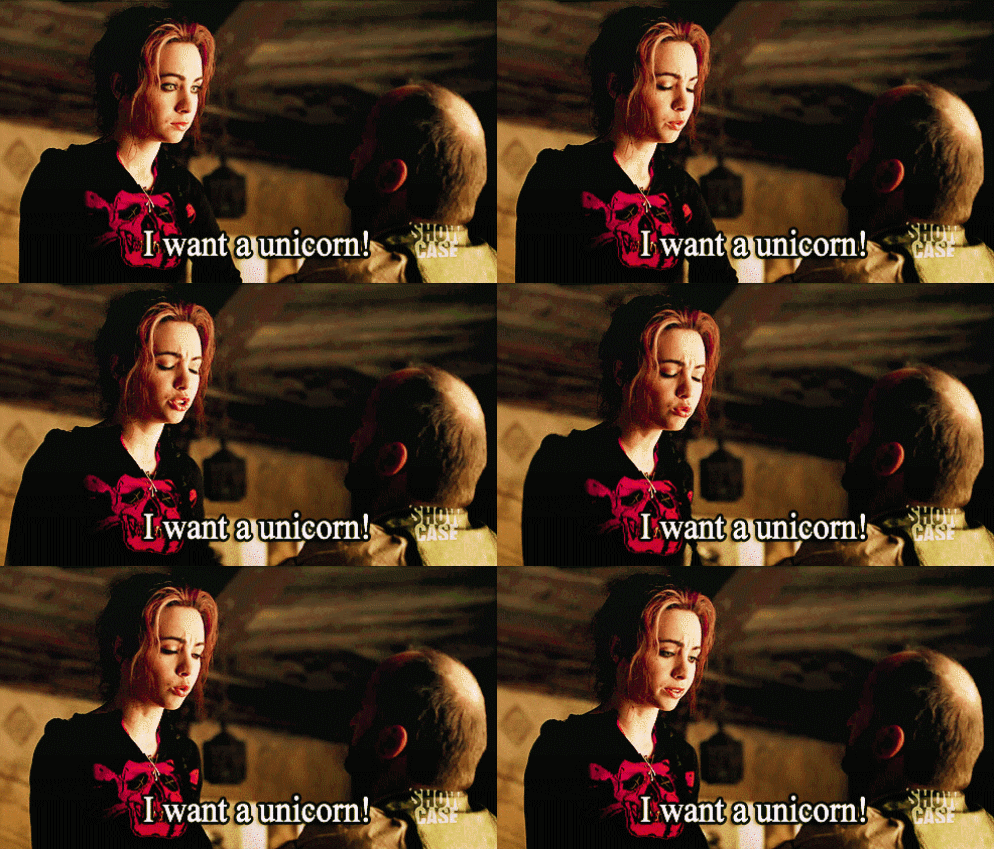
2 - Kenzi, from Lost Girl


Don't we all, Kenzi?

3 - Tamsin, from Lost Girl

Her character arc is one of the best I've ever seen.


4 - Kaylee, from Firefly

If you don't love her, you have no soul. My professional opinion.


5 - Petty Officer Anastasia Dualla, from Battlestar Galactica

This show has a lot of fantastic characters, but Dee had a quiet, steady strength that I think most people overlooked.


6 - Bo, from Lost Girl

Can you tell I love this show? A kick-ass, feminine, bisexual woman who doesn't apologize or agonize over her sexuality? Yes, please!


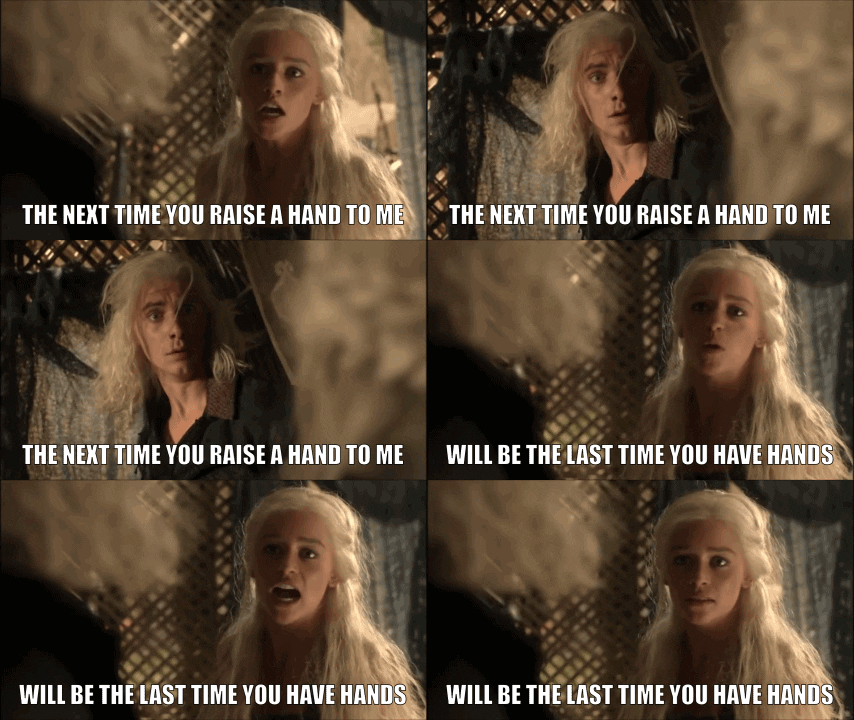
7 - Daenerys Targaryen, from Game of Thrones

Y'all know I couldn't leave out the mother of dragons.


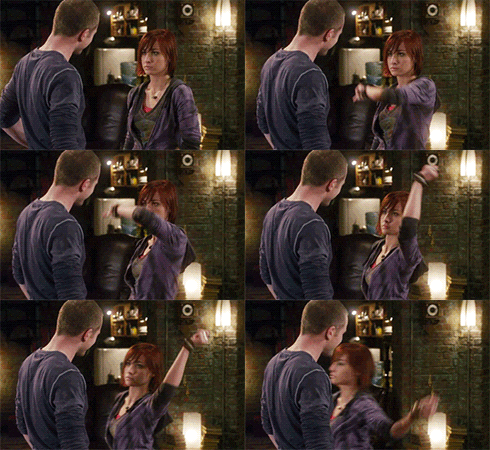
8 - Claudia, from Warehouse 13


9 - The Pink Ranger, from Power Rangers

You go, girl! #notashamed


10 - Rocky Blue, from Shake It Up

Yes, I watch the Disney Channel. Don't judge me. I love Rocky!!


Wednesday, September 10, 2014

Character Worksheets

Whether you're a pantser or a plotter, one thing I recommend either before you draft or when you revise, is working with a character worksheet.


It's not only important to know all the superficial basics (hair color, favorite song, house they live in, etc), it's absolutely VITAL that you know your character's heart and soul. You need to know what drives them, what inspires them, what haunts them. And this is where character worksheets can come in.


This is the basic one I start off with:

What misconception does your protagonist have about himself or the world?

What is he lacking mentally, emotionally, or spiritually, as a result? 


How is the interior Lie reflected in the character’s exterior world?Is the Lie making his life miserable when the story opens?

If not, will the Inciting Event and/or the First Plot Point begin to make him uncomfortable as a result of his Lie?


What are the symptoms of your character’s Lie?


I then go on to explore the character's WOUND and their WANT.  This is to establish what has wounded them in the past that motivates them to fight for what they want in the future.


Character worksheets can go on to cover a whole host of others, and it's up to you how much you want to do, but the more you work at it, the stronger your character becomes.  So, get at it and get to know your characters - mind, body and soul!


Saturday, January 4, 2014

The Wound and the Want: How to Breathe Life into Your Characters

It’s January 4, which means I can still wish you all a very Happy New Year! It seems fitting that this, my first 2014 post, centers on the writing concept that had the most effect on my book, BECOMING JINN, which I teased on this blog last year. (Well, in November but that still counts as last year!)

As a reader and as a writer, nothing matters more to me than character. So it shouldn’t be particularly surprising that an exercise to create a character profile is what kicked my writing brain into gear.

Last month I discussed how having both an inside story and an outside story gives your novel a firm foundation and touched on the concept of “the wound and the want.” This surely goes by other names, but I love the way “the wound and the want” rolls off the tongue.

The idea is simple: The primary characters (and even most of the secondary ones) have a wound that makes them want something. This want is the guiding force of your story; it is what your character is striving to achieve. Essentially, the want is the purpose of your novel.

Wait, and that’s simple? Pretty heavy stuff there, isn’t it? For one thing to be the purpose of your novel?

Well, it is and it isn’t. If you don’t know your character’s wound and want, you will flounder while writing, your story will lack a depth that makes the readers care, sympathize with, and follow your characters, and your novel may not be as strong as it can be. It may not live up to its potential. But once you figure out the wound and the want, everything flows from it and your job is easier, not harder.

Need, hope, wish, call it what you will, but your characters must want something and they must want it intensely. The want doesn’t need to be some spectacular thing. It’s the intensity of the wanting that matters and that instills doubt in your readers that the character can achieve his or her goal. This gives you tension while you toss obstacles at your characters that thwart them from fulfilling their want. And the wound that makes them want? That gives your character depth, motive, and backstory.

One-dimensional characters usually lack a wound and a want. Ditto for cardboard villains. Your main character’s wound and want must be fully fleshed out and must be able to change and deepen as the story progresses in order to sustain an entire novel, but your supporting characters should also have a wound and a want. You don’t have to explore it as fully, but the wound and the want makes them who they are just as much.

So many key aspects of a novel come from these two words: the wound and the want. That’s all good right, but how do you figure out what your characters’ wounds and wants are? There are likely many ways, but I’ll share what worked for me, what I learned in the novel planning course I took that turned me into a proud (and somewhat obsessive) plotter.* It all goes back to those writing exercises I used to scoff at.

As I’ve said previously, the best part of writing exercises is that they have the capacity to surprise you, to spark an idea that may form the core of your book, something you might never have thought of (or only thought of after multiple revisions). This is because they make you think about your characters.

Character profiles can be developed in many ways: writing a letter or diary entry from your character’s point of view to help discover their history and voice; interviewing your characters and answering as if you were in your character’s head; jotting down responses to a series of simple to complex questions about who they are.

Is this hard work? Not really. But it’s more thinking than writing. And we all know how much we writers are just dying to put fingertips to keyboard and start, well, you know, actually writing our stories. As much of a believer as I am in plotting, even I feel that pull and that desire to shove all this aside and just write. But I know in the end how much better my work will be if I put in the thinking time first.

To dissuade myself from giving up on these exercises too early, I go old school: pencil and paper. I take a brand-new, spiral-bound notebook and start writing the answers to these questions by hand. I actually do almost all of my initial plotting and writing exercises by hand. Doing them this way separates them out as a distinct task. I associate notebooks with plotting, so when they are in front of me, I don’t feel that pull to write the same way I do as when I sit at my computer. (If you give it a try, let me know if it works for you!)

So finally an end to the teasing! What’s the one question that gave BECOMING JINN its unexpected backbone? The thing I would have never expected to fuel my main character Azra’s wound and want?

What is the worst thing your character has ever done?

That’s it. I won’t tell you what this thing is because that’d be a spoiler. But the worst thing she did was to her best friend. And the reason she did it is because she wanted what that friend had. And why she wanted it was because of the wound she has had since she was a little girl. Wound, want, story. From one question. Powerful stuff.

Here are some of the other questions I most use when creating character profiles. If they don’t work to spark your imagination, find ones that do. There are many books and Web sites listing these kinds of character-building exercises. Browse through, pull out the ones that get your brain churning, and customize your own character profile exercises. Then grab that notebook and start plotting!

* The writing course I took was at Grub Street with author James Scott as instructor. After two long years of waiting, his first novel, THE KEPT, is debuting on January 7. Congratulations James! And much thanks again!

** Lori is holding an ARC giveaway for Jessica Khoury's VITRO, which will be released on January 14. Enter to win by January 6!


Wound and Want

What does the character want (primary and secondary characters must have wants)?
What are his or her motives for wanting this?
Where in the story is this made clear to the reader? (And it should be.)
How do we learn what the central character wants? Dialogue? Actions? Interior thinking?
What or who stands in the way of him or her achieving it?
What does that desire set in motion?
List five things that are obstacles to what the character wants: can be inside or outside character. Rank their intensity, how hard is it to get past each one?


Who Is this Character?

Name
Age                                                                             
Need/want
Key strength               
Key flaw (and consequences of failure, which is not as important for secondary characters; but for secondary characters, do need: relationship with main character; history with MC; purpose of character in story, how affect MC)
Where live geographically? Describe.
Physical description    
Voice         
Faith
Fashion sense: What would character wear in summer? winter? To a wedding? funeral? bed?
Likes/dislikes
Vices
Nervous habit
Family history/relationships
Key friendships
Role models
Social status                                   
Academic performance
Special talents/hobbies         
Favorite hangout
Favorite phrase
What does he/she do on weekends?
For work?
Favorite meal? What would dinner with them be like?


Deeper Questions (for MC and antagonist)

Worldview
Moral compass
Is he or she a giver or a taker?
Introvert or extrovert and how manifest in life?
Most secret yearning?
Childhood dream that never came true and why?
Worst thing ever done?
Secrets? Secret life?
What has held him or her back in life?
How many people would come to his or her funeral? Why might someone decide not to attend?
Most unlikely or most contradictory aspect?
How strong is character under pressure?
What is their character arc? How change and grow? How apply toward overcoming final obstacle? Tip: at the bottom of every page, write what you know about the character from that page to see if the character is changing over course of the novel, if new information is being given or too much is repetitive.