Monday, February 16, 2015

A First Chapter Checklist

As part of the the Freshly Squeezed Read's Chapter One Blitz I had to write a post all about first chapters and how I tackle them. I realized that while I'm drafting, I don't actually think too much about what's happening in that first chapter - I just pick a spot to start the story that feels natural and exciting and start writing. It's only in the revision stage that I go back and get analytical about what's actually happening and more importantly, what's working or not, in that first chapter. I have now compiled a short checklist for myself and thought I'd share it with you.
1) Have I sucker-punched the reader with my first sentence? First sentences are so important and so difficult. I know some writers who won't start drafting until they've crafted that perfect opening line, and others who will rewrite and rework an opening several dozen times before calling it done. I'm somewhere in the middle. I like starting with a strong image and then moving into the story, providing context for the first sentence.

2) Have I introduced the main character in a way that makes the reader care? Super important. I know from my own experiences when reading the sample pages on Amazon, that if I don't connect with the MC right off the bat, I'm not going to keep turning pages and certainly won't be buying the book. How to do this then? The easiest way, I think, is to show a vulnerability, a cute quirk, or to hint at their internal conflict – basically give the reader a reason to root for your character and make them human (even if they're orcs, robots or aliens).

3) Have I established the setting? I like to know from the very first paragraph whether I'm in a medieval fantasy world or contemporary New York. I like don't being kept in the dark about the where and when. Similarly, I prefer books not to start with too much setting description so I try to strike a happy medium between the two in my own writing.

4) Does something happen? Well, duh. If nothing happens in the first chapter then I've clearly started the story in the wrong place. The story needs to kick off in the very first chapter because few readers are likely to stick around if nothing happens.

5) Have I established the stakes? This ties in with #1 and #4. By establishing what's at stake for the MC, you will help the reader care about your character while kick-starting the plot. While not all the stakes have to be apparent by the end of chapter 1, there should be enough story and enough character development to show the reader what the consequences will be if the MC does or doesn't get what they want/need.

6) Am I excited by this chapter? If I'm not excited to write the words, readers certainly aren't going to be excited to read them! The biggest test for me comes in revisions months after the first drafting session. If my first chapter doesn't make me fall in love with my story all over again, then it definitely needs some work.

I could add a bunch of other things to the checklist, but I think these are the most salient points for me without getting bogged down in the nitty-gritty of plotting or characterization. There is one last question I ask myself though, and it's one I find almost impossible to answer. Once that first chapter is done and dusted, polished and perfected, I always ask myself, so is the rest of this novel any good? Because a great first chapter is only the beginning that will hopefully lead to a great whole book!
Do you have a specific way of tackling a first chapter? Got anything to add to my list or think I've overlooked something? Please let me know!

Saturday, February 14, 2015

I Have Forgotten How to Write


Hello 

Sorry I missed last month. I had just moved and still didn’t have the interwebs available to me. But now I am back slowly getting things settled here in my new home. I even have an office now, though it currents is a staging ground for boxes that need to be broken down.

I really wasn’t sure what I was going to write about at first, but then it hit him. It hit me like a ton of bricks. Like a thousand computer keyboards sitting there in silence and eyes looking at a flashing cursor with no letters being typed to create words.  

But before I being I have to say a lot has happened to me over the course of the past couple of months; both good and bad

New job

Moving

Moving in together with girlfriend

One of my closest and dearest friends died

Another person I know died

A good friend had a massive stroke and will never be the same again

Gallifrey Pirate Radio is consuming more and more of my time

I discovered I can make art

I have another round of conventions coming up

But all of this caused me to stop writing. It put a foot on all the creative writing juices, the gas tank is on empty. And I am not talking day to day writing, but fiction writing. The thing I loved to do. The thing I couldn’t imagine myself not doing. It is no more. It gone. Vanished…  

Right now I am sitting on a novel that has interested in it. It is on its final draft.

I have novel that is needs a lot of work, but it is good. It is one of the things I was writing on that I was quite happy with. There was just something there that was rocking and rolling for me. I felt the magic in the words.

There are also a handful of other projects just sitting there looking at me in the face, wanting, begging for me to write… But I can’t do it.

I am not sure why.

Is it writer’s block? I don’t think so. Writer’s block is easy to work through. I have done that many a times.

Am I finally scared at succeeding? Maybe a little… but no. I have already succeeded. I have been paid for what I write. I am not a New York Times bestselling author, but I am making money, mostly fun money, out of writing.

What I think it is; I have just forgotten how to write. Or the way I use to write. And I am not going to lie. I do think life in general got in the way of my writing and it got me so out of practice or the routine I was in that I lost my grove.

I know I am not the only person (I don’t think I can all myself a writer at the moment) that this has happened to and I will not be the last.

So things I am doing to help overcome my life block with writing and getting the grove back that I lost.

-Starting of small. I am not trying to do a lot at first. I am trying to edit at least one sentence a day. This might sound silly, but if I do one sentence that sentence might lead to a second sentence and maybe a third… Who knows? That was how I use to write one sentence at a time to see where it would lead me. I am just trying to get back into the habit of sitting in front of the computer and creating worlds of words.

-I am not beating myself up if I only edit one sentence or write one sentence. I need to get comfortable with the craft of writing again, while still doing art and video. I am a very busy person and it will take some time manage everything going on in my life now. So I am giving myself the chance to figure that out.

-I have reached out to the community of writers that I know and they have been wonderful. So I am not afraid to ask for help when I need to ask for help, now that I am in an area where I know lots of wonderful writers, who are inviting me out to local writer groups and meet ups. I am really looking for to heading out to one of them to try to re-energize.

-I am trying to write during the times of the day that I use to give to and into writing. There were magical times in the day when I just wrote and I am trying to give those times a day a chance reignite that fire within. Trying to recapture the familiar and the past in the present.

- I am not giving up. I have to work past the doubt that exists in my head and keep moving forward. I have to prove to myself that I can still do this writing thing, because I know that I can and will.

So what I am trying to say is don’t beat yourself up if hit that wall and feel lost in writing or not writing. There is always hope. You might have to take baby steps write a few words, then sentences, then paragraphs. Just don’t beat yourself up that will only make things worse. 


Friday, February 13, 2015

Micro-editing your work with author John Davidson


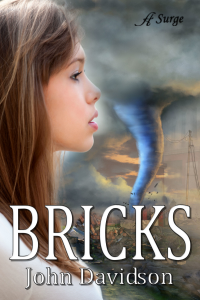
Today we're welcoming John Davidson to the blog. John is the author of the recently released YA contemporary novel, Bricks. Take it away John...


Micro-editing Your Work
by John Davidson

Thanks so much for having me on the blog. I love this blog and the service it provides to aspiring authors. I thought I’d write about something that has really helped my writing. My debut BRICKS is a YA contemporary, but the genre I most enjoy reading and writing is speculative fiction. Don’t get me wrong I enjoy a great tale set in the here and now, but there’s just something about a world that acts as a character on its own that really draws me in.

When you study the target word counts for YA fiction, the sweet spot for contemp. seems to be between 65K and 80K. BRICKS comes in at around 68K, and surprisingly I had no trouble hitting within the target. I say surprisingly because the three WIP’s prior to BRICKS were all spec. fic. And they all came in so bloated that you’d have thought they’d eaten a dictionary and a thesaurus with a few research articles as a snack in between. Target count for YA spec. fiction is higher due to the necessary world-building elements—80K to 100K is often regarded as acceptable. My latest came in at 110K. At first I tried to justify the count. I mean Veronica Roth went from an initial Divergent word count of 55K to a finished count of 105K . 105, come on. That’s only 5K from 110. But 5K is a ton; my book was not Divergent, and I’m not Veronica Roth. Unagented/unpublished writers need to have as few strikes against them as possible. Too high of a word count is potential project suicide. So what do you do when you feel like your story is solid, not a lot of fat to be trimmed, and you’re still overweight/over words?

First, I would say there’s still story to be cut even if you think there isn’t. You may feel as if every story step matters, but the truth is if you judiciously cut a scene out, no one will ever know you did it. Here’s a tip: concentrate on scenes that don’t foreshadow or tie into a future reveal. Scenes that are developmental scenes—that deepen a character, for instance, are often too wordy. You may find entire paragraphs that you think deepen, when in fact they merely repeat a trait already revealed. Again, nothing wrong with reinforcing a character’s tendencies, but you don’t need to overdo it—especially when you need to trim. Often you can find whole paragraphs to cut. And that’s critical when every word counts.

After cutting scenes, I was at 100K. That’s roughly 30 manuscript pages shaved. Great, but still too unwieldy. I’d hit a wall. But here’s what finally helped. I needed to cut another 10K. That would get me to 90K, which is the maximum of where I felt I could be as a debut spec-fic writer. My degrees are in English, but while words mattered, this was about math. To cut another 10K I needed to go micro. I needed to lose words from every page. 10K sounds like a lot. But 20 words a page? Not so much. That’s a sentence or two or just 20 scattered words—a “that” here an adjective there. I started with a journal of a word count from each page before I started editing and then dove in. What I discovered was obvious to most advanced writers. It was revolutionary to me. By being forced to cut 20 words a page, I had to examine the placement and necessity of every word. Sometimes words could be cut by adjusting sentences to remove a prepositional phrase. Sometimes a modifier could be rearranged. I recorded my post-edit per page word count. If I didn’t meet the goal on a page, I had to make it up on the next, but in the end I’d shaved the necessary 10K, and more beneficially, I’d examined every word in every sentence and weighed its merit and value.

Now I don’t advocate doing this for every project as it forces constraints on your personal space-time continuum that just shouldn’t exist. I do, however, think that every beginning writer should do this at least once. By doing so, a writer’s work can be distilled into the most effective format possible. And you’ll find that over time, your writing will improve to the point where this type of editing is less necessary as your sentences are stronger and word choice more intelligent from the get go.

Cheers and happy writing!          

Bricks cover
Sixteen-year old Cori Reigns learns that not all tornadoes take you to magical places. Some take your house, your school, and life as you knew it. Struggling to put the pieces of her life back together, Cori learns to rebuild what the storm destroyed by trusting a family she didn't know she had and by helping friends she never appreciated.


a Rafflecopter giveaway
John D author
About the Author:
Married to my bride for twenty-four years, I have an amazing son and a wonderful daughter. Born and raised in central Oklahoma, I work in education, first as a teacher now in technology curriculum. I write. I read. And in the summer I make snow cones. Find John on Twitter @jdavidsonwrites or connect with him at his website and on Goodreads.


Thursday, February 12, 2015

YA's PG-13 Misconception

The other day I was listening to the audio book of Kendare Blake's ANNA DRESSED IN BLOOD. Within the first two chapters I heard the "F" bomb. Twice.

It was wonderful.

But I found myself double-checking that the book was indeed a YA. For the record, it is Young Adult. And shame on me for thinking just because a book has a certain four-letter word it suddenly becomes Adult.

YA is not the literary equivalent of a PG-13 movie. This is something I had a misconception of. Young Adult fiction is defined that way simply because the perspective of the narrative and main characters is that of an adolescent. That's it.

It would be ignorant to assume teenagers don't swear. It would also be naive to think some don't occasionally smoke, drink, have sex, take illicit drugs, make mistakes, have an opinion.

They are human aren't they?

The wonderful thing about literature over film is that there isn't too much of a box to be cramped by. Each of our experiences with a book, while shared in regards to the plot, is completely unique for every one of us.

Whether it's the fantastically grotesque aftermath of a monster attack in Rick Yancey's THE MONSTRUMOLOGIST or the aforementioned Kendare Blake novel, YA doesn't mean authors should back down from the way they intend to tell their stories. Even though it's all lies in the end, truth resonates still. Readers expect as much. Readers deserve as much.

Sean


Tuesday, February 10, 2015

Research

I'm sitting here on a wet, blustery day (yes, it gets wet in Cyprus, too!), and I'm working on  a scriptwriting job that entails a lot of research, and it got me to thinking...what influence does research have on fiction?


The most obvious genre people think of when you talk about research and fiction is historical fiction and its sub genres. And of course that is one big Pandora's box right there. However, writers in sci-fi have to do their homework, too, so it's probably the second most thought of genre. And of course, you have research in all the other genres - mysteries, crime, and thrillers need a solid understanding of criminal justice, medical procedures, and gang cartels, drug rings...you name it. Even your contemporary work needs research - settings, character hobbies, cultural biases, etc. And let's not forget romance - that needs the same thing. And before you fantasy writers think you're off the hook, you're still going to need a lot of research too - how to world build, what elements cause social conflict, how politics and religion grow, etc. Yes, every genre has its own inbuilt research requirement.


But what impact does the research have? I hear contemporary writers cry "can't I just not mention what materials houses are made of in that area?", fantasy writers humph "but it's a made up world, I can do what I want", romance readers shout "but people are only interested in the love story", and thriller writers say "does anyone even check those things anyway - who cares if houses were made of oak in that area or not?"

While it is true you can skim, you'll be shortchanging yourself, your book, and your readers. Research is the "devil in the details". It's what gives your book that feeling of authenticity. It transports the reader into a world where the author has full authority. It is what brings a book from a story in the page, to a live world in the reader's mind. In short, it makes a book become a reality.

So, when you think of research and you groan...instead, think of how many doors you are opening to lift your novel from make-believe into reality.

Happy researching!!!


Friday, February 6, 2015

Agentopia: Andy Ross

Welcome to the first 2015 edition of Agentopia! For more information and to see other Agentopia posts, click here.

This month Andy Ross from The Andy Ross Agency is in the spotlight.


All about Andy Ross:

I represent authors who write books in a wide range of subjects including: narrative non-fiction, science, journalism, history, current affairs, contemporary culture, religion, children's books and  commercial and literary fiction.

I am eager to work with projects in most genres as long as the subject or its treatment is smart, original, and will appeal to a wide readership. In narrative non-fiction I look for writing with a strong voice and robust narrative arc. I like books that tell a big story about culture and society by authors with the authority to write about their subject. 

For literary, commercial, and children's fiction, I have only one requirement--a simple one--that the writing reveal the terrain of that vast and unexplored country, the human heart. 

I am a member of the Association of Author Representatives (AAR).


Send queries and materials only by email to andyrossagency@hotmail.com.


1. What are you looking for in YA submissions right now? 

I  prefer novels that are grounded in realism and have a strong adult crossover potential.  If your book is about zombies at the prom, hmmmm, I may be the wrong agent for that one.  This year a book that I represented,Beauty of the Broken  by  Tawni Waters  [link], was published by Simon/Pulse. It  fit in perfectly with my sweet spot.  It’s about a 15 year old girl in an abusive family situation  growing up in a closed-minded   small town dominated by a bigoted minister. She is slowly discovering that she is a lesbian.  It has brilliant writing, a stunning voice, and a story that grabs you by the heart and won’t let go.  It’s really a story about finding your courage. The themes are universal and will appeal equally to teens and adults. I like historical YA as well, but it’s quite difficult to get  published. I’ve worked with urban fantasy and paranormal. But they really have to have compelling themes that speak to real life issues.

2. What's an immediate turn-off in a query, something guaranteed to get the author rejected?

I have a blog, “Ask the Agent” [link], about writing and publishing. I have written  a number of posts on query letters.   I teach at a lot of conferences, and I find that authors are intimidated by writing query letters.  Writers need to know that query letters aren’t really that hard and there is no iron-clad formula for writing one.  The biggest problem I see with first draft query letters is that they are usually too long.  Agents get 20-50 queries every day. We don’t have a lot of time to look at each one. I like a query structured in 3 parts: 1) first paragraph: statement of the genre and number of words. YA has lots of sub-genres, so you might want to provide a little more information. 2) Second paragraph: a very brief statement, maybe 5 sentences, about what the story is and why it is compelling.  3)  Third paragraph: who you are and why you are qualified as a writer. But, remember, a great query letter won’t help you if you have a bad novel.

As a mental exercise, I tried to compose the “perfect” query letter. I wrote a blog about it called “The Best Query Letter Ever Written” [link: https://andyrossagency.wordpress.com/2014/08/04/the-best-query-letter-ever-written/]. I challenged myself by composing a hypothetical query for the longest and most complicated novel in the Western Canon, War and Peace by Leo Tolstoy. It’s about 1500 pages long with a huge cast of characters and an complex and intricate plot. I got the query down to 254 words, and I think I did a pretty darn good job.

3. What's the story got to have to make you want to represent it?
 
Again, I refer you back to Tawni Waters’ Beauty of the Broken. (And, by the way, she wrote a perfectly awful query letter.) It’s a cliché to say that there are only 10 stories in the world. But it’s kind of true.  For me, a good novel is more about the “how” than the “what”. The first thing I look for is style. I can usually tell by the end of the first page, sometimes by the end of the first paragraph, if the author has the talent to write.
 
You can learn a lot about style by taking writing classes, getting an MFA, or going to conferences. But what I am looking for is the next level up, the mastery of those ineffable qualities you just can’t teach; sometimes you can’t even explain.   I don’t mean to get all mystical here, but I think it is a gift, your connectedness with the Muse.   I knew when I read the first paragraph of Beauty of the Broken that this book was special.
 

Still, even with the most talented writers,  sometimes the story falls apart on page 11 or page 100. I lose interest. I fall out of that trancelike state that a great novel leads me into. But then, every once in awhile, I find myself finishing the last page at 3 AM and crying like a baby. That’s the book I’m looking for!

Wednesday, February 4, 2015

Loud and Clear: Part 5: Tips and Exercises for Finding Your Writing Voice

Over the course of the past four posts in this series on voice, I’ve given you a lot of information about the elements of voice. But you may still be wondering how you go about finding your voice. (Find the previous posts as follows: part 1 on defining voice; part 2 on POV; part 3 on tense, grammar and punctuation, and sentence structure; part 4 on word choice.)
This post offers some tips and exercises you can use to discover your own voice.
Before I begin, I’d like you to keep in mind that a writer’s voice can and will vary—particularly when crossing genres of fiction (and nonfiction). You probably wouldn’t write a romance novel the same way that you write a crime story.
There is likely to be an overall consistency in the writing and voice across your body of work: your voice will (and should) be different in everything that you do, but there’s also going to be some similarities because you are who you are.
And that’s a great thing. Readers come to your work because they like what you do and have some idea of what to expect. This gets into branding, which is a whole ‘nother topic!
A writer like Stephen King or John Green is going to mean something to the reader. Again, Rainbow Rowell is a good example because she writes both adult and young adult fiction. While the stories and characters are different, I know there will be an element of humor in her work and I love that.
This is the same with my own writing: I also try to write with humor. I know myself, and I know I’m not going to be able, at least in this stage of my career, to write a realistic portrayal of the bleakest, most dire days on earth. Someone will crack a joke. Super dark is not my style, and so I’ll write projects and characters that lend themselves to my style—to my voice.
And I don’t have to apologize for that. If I don’t write what I love to write and what comes naturally to me, I’m ignoring my voice and it will never be my best work.
Okay, so if it’s your distinct voice that keeps your readers coming back for everything you write, how do you develop that voice? How do you find your authentic voice?
Here are some tips for doing just that:
1. Try reading a lot of works by one author and looking for patterns. What’s similar? What’s different in terms of style and voice across all of the author’s novels?
2. Figure out what you love: The lovely Lee Kelly, whose amazing debut City of Savages released yesterday, told me this and I thought it was great. It’s a way to unabashedly discover your voice and not feel like you need to be like someone else—because you shouldn’t, remember, this is all about being unique and true to yourself.
Lee made a list of the books, TV shows, and movies she loved. Pure love. No judgment. Though she reads and watches across genres, when she studied the lists for common elements, she discovered there were many. She was most drawn to sci fi and fantasy, things with grander moral themes, and dark and edgy.
Those were the building blocks for what she wanted to write and the style in which she wanted to write them.
3. Describe yourself in three adjectives. This is another one that gets at who you are and what you like. For example: funny, loud, and outgoing. Then ask (and answer) the question: “Is this how I talk?” Then, ask other people how you talk. You can discover a lot about who you are by what other people see. It might surprise you.
4. Define your narrator. This plays into the idea of knowing your character. If you don’t know who your character is, you can’t discover his or her voice.
One way to get to know your character is to create a character profile, and there’s a lot of advice online for how to do this. Or start out more simply: come up with characteristics or traits for your narrator and create statements as if that character was saying them. “I’m a klutz.” “I have self-esteem issues.” “I’m terrified of public speaking.”
What do these traits tell you about that character? You can find out a lot about your character’s voice, and your own writing voice, through this exercise.
5. Imagine your ideal reader. Describe him or her in detail. Then, write to her, and only her. Example: My ideal reader is smart. She has a sense of humor and loves pop culture.
6. Free-write. Just go nuts. Write in a way that’s most comfortable to you, without editing. Then go back and read it, asking yourself, “Are my stories like this? Do I want them to be?” Honestly ask yourself, “Is this something I would read?” If not, you should probably think about changing your voice. Also ask yourself: “Do I enjoy what I’m writing as I’m writing it?” If it feels like work, you may not be writing like yourself.
To conclude, we talked about a writing voice being important for finding and hooking readers and editors. But there’s another reason. If you aren’t writing with your voice, if it doesn’t come naturally for you, you will burn out. It’s exhausting to try to write like someone else.

You need to feel free to be yourself. But that doesn’t mean you are off the hook for honing your voice.

All writing is craft, and voice is no different. The starting point is being true to yourself, but all the rest presented in this series can and should be used to make your voice as strong as it can be.

It may be the single greatest struggle for most writers. It won’t happen overnight, but if you pay attention to it and work on it, you will find your writer’s voice.


Lori Goldstein is the author of Becoming Jinn (now available for preorder; Feiwel and Friends/Macmillan, April 21, 2015, sequel, Spring 2016). With a degree in journalism and more than 10 years of experience, Lori is a freelance copyeditor and manuscript consultant for all genres. She focuses on the nitty-gritty, letting writers focus on the writing.

Monday, February 2, 2015

How to Tell If You're a Writer

Happy 2015!!!

An important part of resolution making and keeping them is being completely honest with yourself. Whether that comes in the form of keeping your resolutions attainable or by simply embracing who you are, its vital to success. 

In keeping with the theme of the latter, I've prepared some humorous truths for you to embrace with your mind and enjoy with your laughter.

You might be a writer if....

You wish there was a way to transcribe the conversations between characters you manage to perfect every time you are away from a writing utensil.

Watching dramatic television shows makes you either pine to write a similar super-twisty plot or very sure you could write a better one.

You’re idea of meeting a writing deadline includes caffeine and bags under your eyes.

You can’t decide whether your rough draft is the best thing since microwave pancakes or the stinky feces of the evil gnome king. (Sorry,, I just started writing my cruddy amazing MG rough draft. The characters are all over the place.)

You occasionally find inspiration in the weirdest places or at the most inconvenient times.

You never procrastinate, you just read and watch T.V. for research. A lot.

Waiting for a critique partner’s comments manifests a pointer finger or thumb twitch that opens your email inbox every 15 minutes.

You feel like a hypocrite when you give writerly friends advice about rejection and persistence.

You’ve pre-programed your brain with creative responses for those occasions when someone is talking to you and you were troubleshooting your latest draft's plot issues.

You know a numb butt and pangy wrists on any given day means something was accomplished the day before. Even if its just a lot of mental plot planning and backspace pushing.

 A stressful or unexpected life event happens and all you can think is "plot twist!"

A friend or significant other comes to your house for the first time and raises an eye brow at the strange groupings of text subjects, such as recipes, sources of natural venoms and poisons, and Grave Digging 101.

You occasionally slip into 3rd person narrative about your life.

 You forewarn new acquaintances that they may end up in a novel. Sometimes you ask permission; others, you secretly watch their every move and tuck it into the folds of your brain for later.

You know writing is hard work, that it drives you bonkers and leaves your home a mess. And you still love it!

Do you have any more fun ones to add? Please leave them in the comments so I can laugh too!


---

E.G. Moore

E. G. Moore is a poet, freelance writer, and storyteller. She is a long distance member of For Pete’s Sake Writers Group in Washington and is a Rocky Mountain Chapter SCBWI member. She loves writing stories that send her young readers on adventures they can't experience in real life. She’s excited to be the new blog assistant for YAtopia. When she’s not telling “Mommy Made stories” to her two daughters or nagging her husband to edit her latest manuscript, she can be found off-roading in her suped-up ATV, swimming, or in a long, plot-refreshing bubble bath. She tweets @egmoorewriter, posts on facebook.com/emilygmoorewriter, and blogs at www.emilygmoorewriter.blogspot.com.